
At My Mother's (Tiny) Table
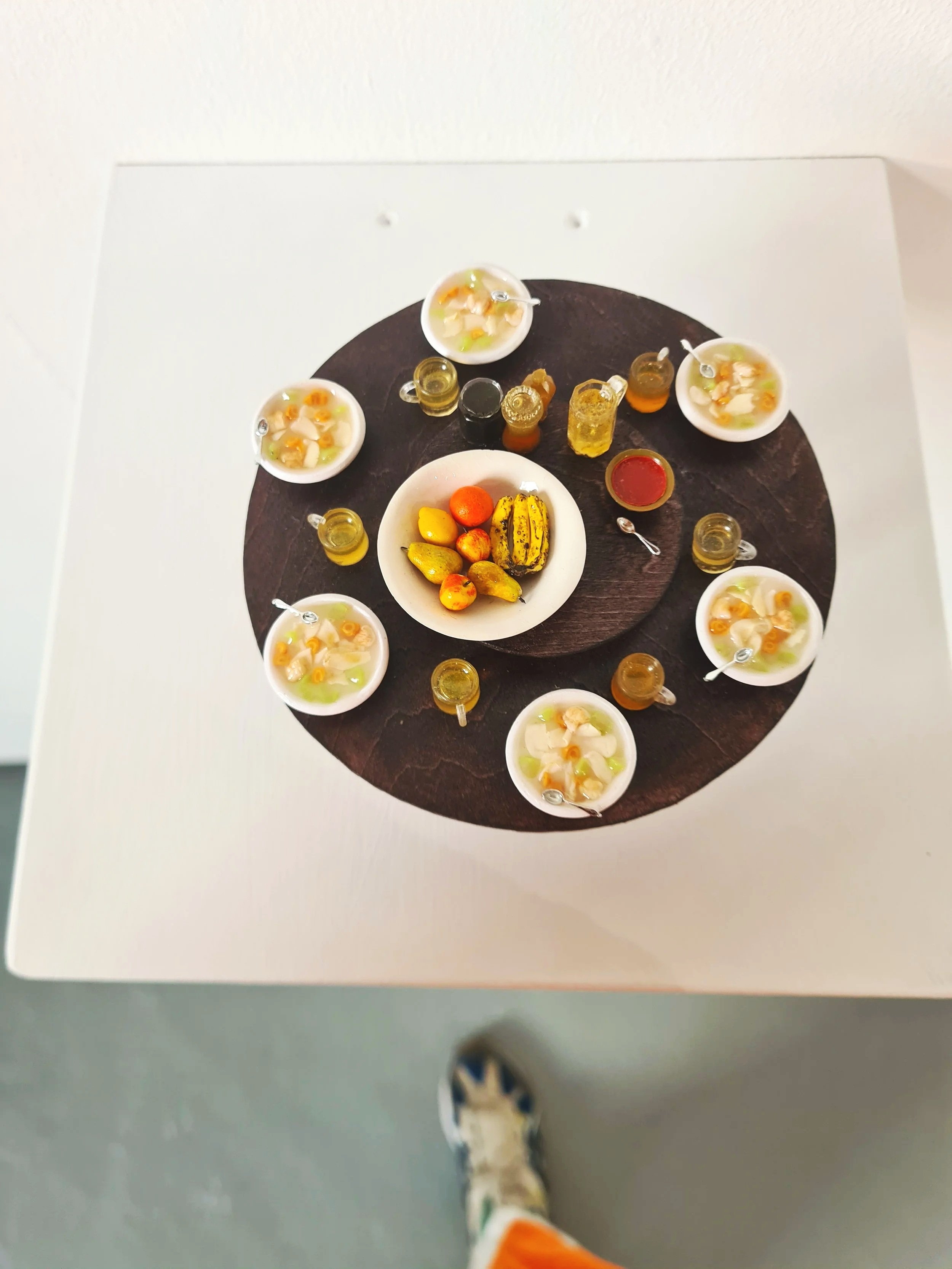
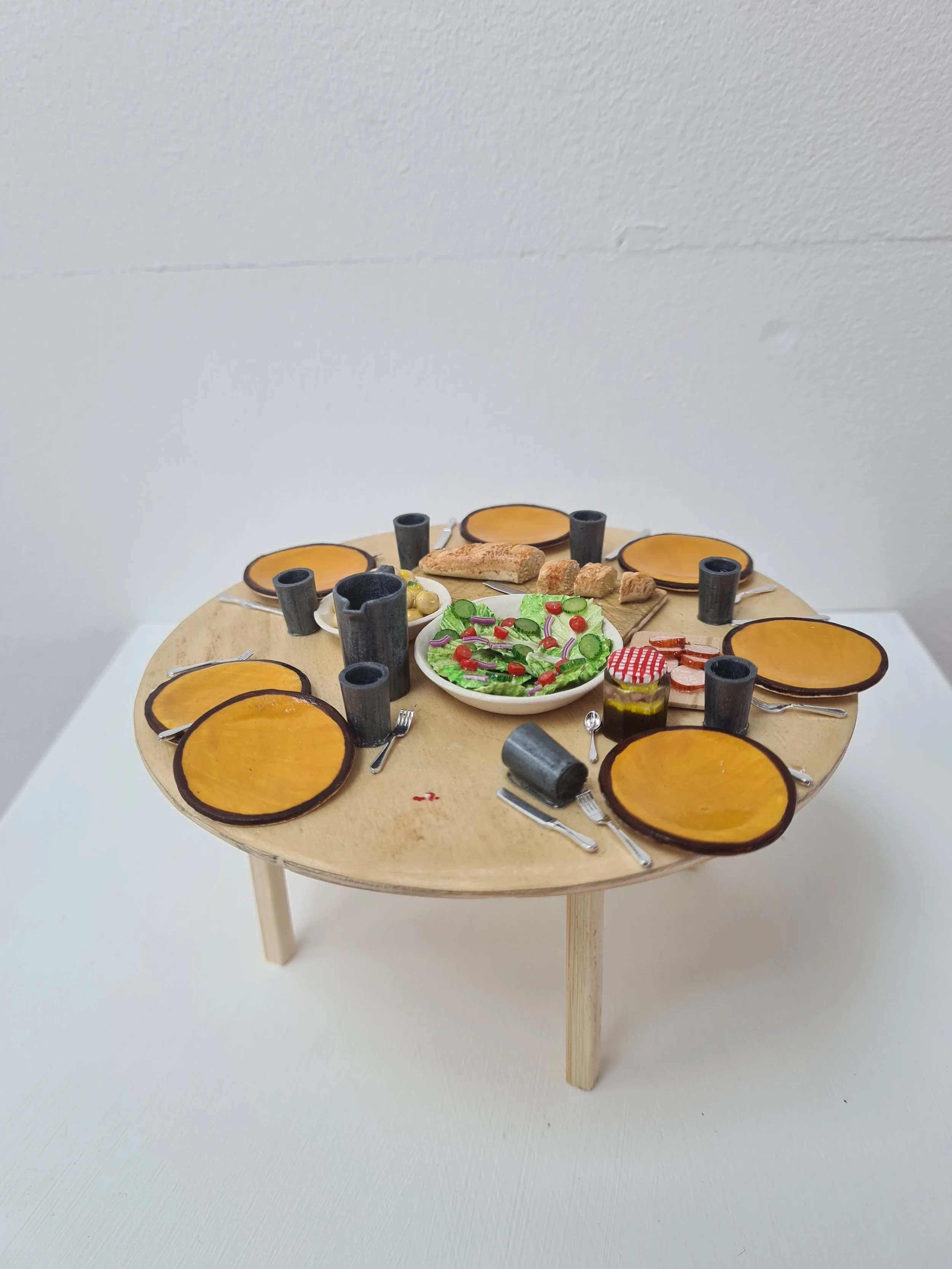
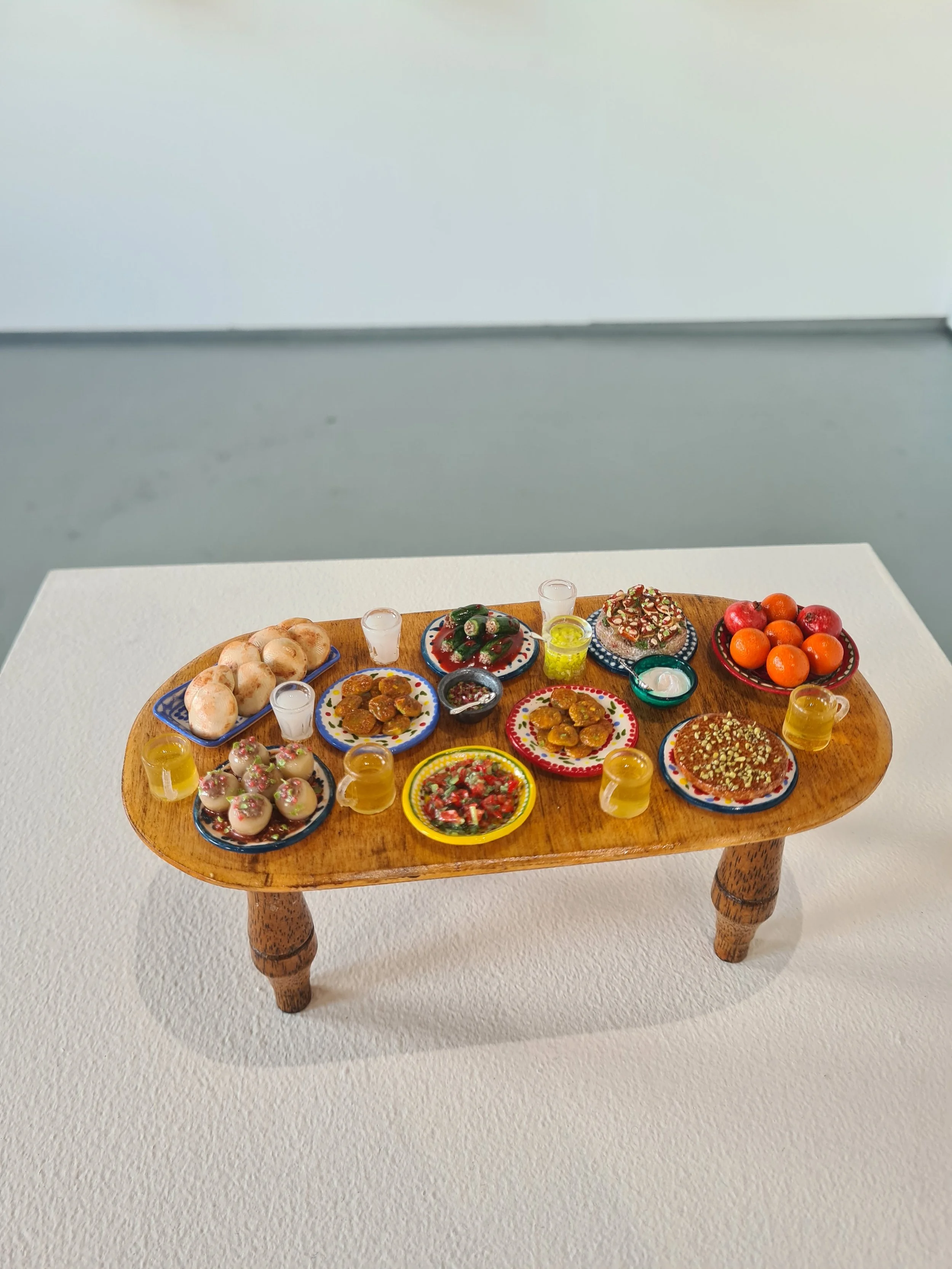
Shinbi’s Table by Alice Hewitt at Strange Cargo, Folkestone
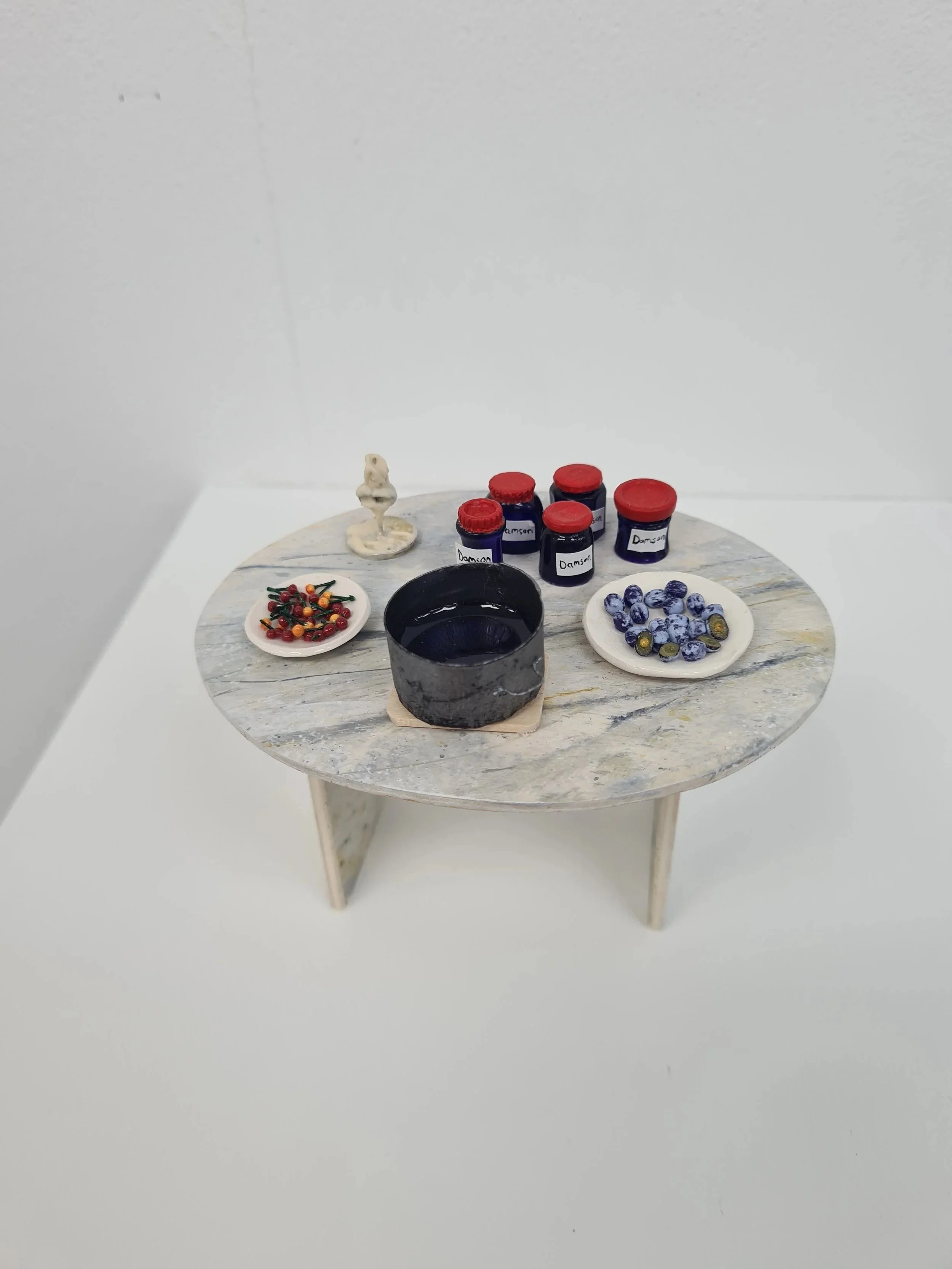
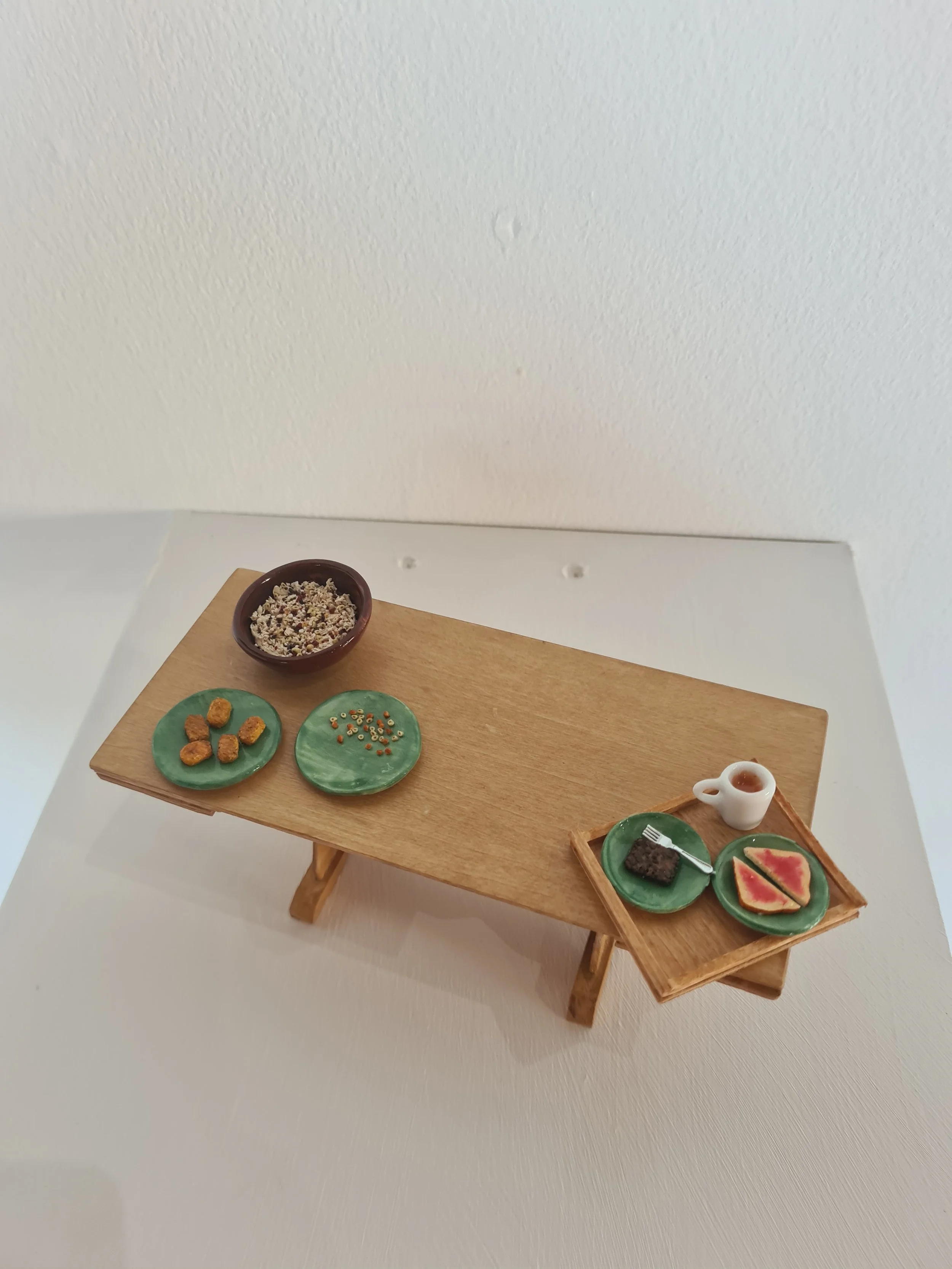
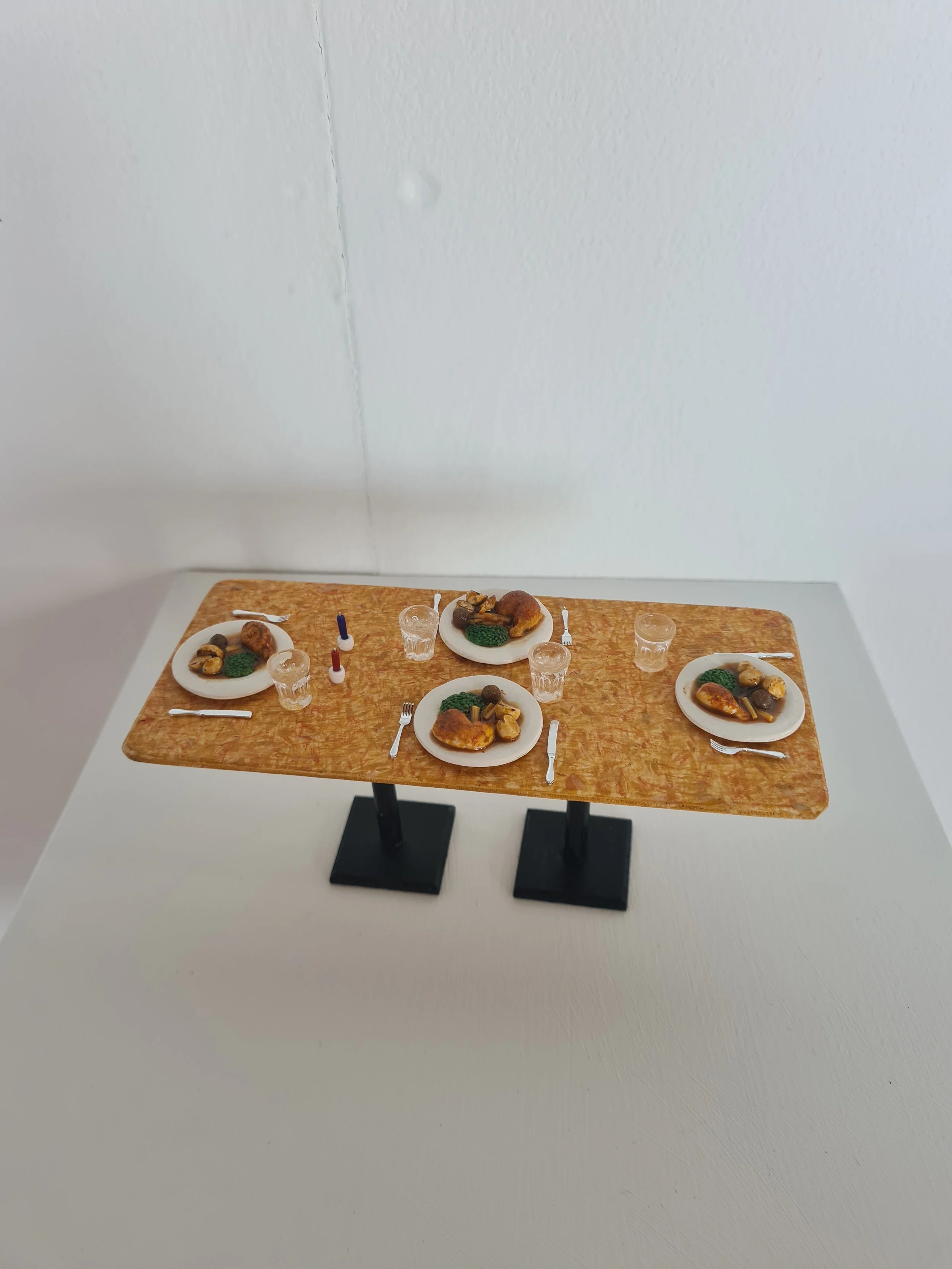
Sculptor and miniaturist Alice Hewitt explains the secrets of her tiny kitchen tables.
There's also a lo-fi video version of this episode with images of the tables discussed on YouTube. You can also buy the book from the exhibition, with images of each table and their accompanying texts HERE.
Find Alice online:
Instagram: @alicemakesathing
TikTok: @alicemakesathing
YouTube: @alicemakesathing
Website: alicemakesathing.co.uk
---
Lecker is a podcast about how food shapes our lives. Recorded mostly in kitchens, each episode explores personal stories to examine our relationships with food – and each other.
Looking for something to read? Find all of the Lecker Book Club reads on my Bookshop.org list. [aff link]
Support Lecker:
Patreon: patreon.com/leckerpodcast
Substack: leckerpodcast.substack.com
Apple Podcasts: podcasts.apple.com/gb/podcast/lecker/id1158028729
Merch: leckerpodcast.com/merch
Listen everywhere: leckerpodcast.com
Instagram: @leckerpodcast
Full transcript available below.
Music by Blue Dot Sessions
[00:00:00] Alice: Maybe just clip it in your neckline somewhere. Yeah, be close to your mouth.
[00:00:09] Lucy: Perfect. And let's see.
[00:00:13] Alice: Never done a podcast before.
[00:00:14] Lucy: Oh, well I'm honored. Thank you.
[00:00:17] Alice: I am So I honored that you said yes to being a part of it.
[00:00:21] Lucy: Oh my God, no. Like.
[00:00:23] Alice: I love your table 'cause it's different. Did you see the picture I sent you?
[00:00:26] Lucy: Yeah.
[00:00:26] Alice: Is it
[00:00:26] Lucy: okay? I actually, I was just looking, I actually feel quite emotional about it..
[00:00:29] Alice: Oh, okay.
[00:00:31] Lucy: Like, I don't know. I think it's just something about these details don't really get like commemorated. Um, and when you, you know, when you send the question someone Yeah. And you don't think of it being necessarily important in the way and like, you know, to give each table this space as you have done.
[00:00:50] Like, it actually makes me feel quite emotional. Good that's what I was hoping!
[00:00:54] This is Lecker. I'm Lucy Dearlove.
[00:01:02] I'm in a gallery space converted from an old warehouse on the outskirts of Folkestone. Inside alice Hewitt has been setting up her exhibition At My Mother's Table. I mean, how many tables do you have in this exhibition? 37. 37 tables. And how long have you been working on them?
[00:01:20] Alice: This is actually two years worth of
[00:01:22] Lucy: that.
[00:01:22] Oh my God.
[00:01:22] Alice: Because I did, I did a smaller version of this exhibition last year.
[00:01:26] Lucy: Yes.
[00:01:26] Alice: Which I think I sent you pictures of when I was sort of reaching out, which had 20 tables in it. 23 tables. Okay. Um, and then I wanted, I wanted to do it again. I wanted more stories, right. So I reached out to more people, and this is...
[00:01:44] This the, and it fills two rooms and I can't quite believe I managed to fill two rooms with tiny things.
[00:01:50] Lucy: 37 tables sounds like it should fill even the most lofty of warehouse gallery spaces. But Alice is also a miniaturist and her tables are tiny. Measuring at most five or six inches across and about four inches tall.
[00:02:07] They're mounted on the walls of the gallery and atop plints in the middle. When you first enter the room, there's little detail to be seen and they don't dominate the space. But as you get closer to each table and your eyes adjust, each world expands in front of your eyes.
[00:02:24] Alice: Everybody has a kitchen table.
[00:02:26] And because I had the first exhibition to, as an example, to I could reach out to people and say, I've done this, would you like to be a part of it? And so people responded to that like Nigel Slater or Meera Sodha. And, um, came back and said, yeah, we'll, we'll, we'll be a part of it, which was such an honor.
[00:02:47] Lucy: That's amazing.
[00:02:48] I had actually, I had no idea that that had, that was the case. Oh, really? I just, I think I just didn't. Register if you said that, I'm not sure. I, you were on the flyer and I was like, oh my God.
[00:03:01] Alice: Well, you were one of the people I had, I made this massive spreadsheet of about a hundred names of people in Food, God, that I wanted to reach out to.
[00:03:08] And you were one of those names.
[00:03:10] Lucy: Oh, that's sweet.
[00:03:10] Alice: So I probably didn't tell you that because you were part of this mail out of people I'd like to be included with. So, um, yeah.
[00:03:23] Lucy: I knew of Alice's work already when she emailed me last year. Someone I know had seen her original exhibition in Margate. I hope this message finds you well. She said, my name is Alice and I'm a miniaturists and sculptor based in Margate. I am currently working on a project that delves into the formative culinary experiences of influential chefs and food writers like yourself.
[00:03:46] Flattery will get you everywhere. I'm creating this collection to be shown at Strange Cargo Gallery in Folkstone in 2025. The project, titled At My Mother's Table, aims to capture the essence of your childhood kitchen table. The food, the atmosphere, and the memories that have shaped your culinary journey.
[00:04:06] My goal is to create a series of miniature sculptures that bring these nostalgic moments to life, reflecting the intimate connection between food and memory. Attached to the email was a questionnaire, the answers to which Alice used to build and design each table. The questions were things like, where did you grow up?
[00:04:28] What was your kitchen table made from? How many chairs fit around it? What was typically on the table other than what was relevant to the meal? Eg. A fruit bowl, newspapers, post, et cetera. What did your crockery look like? Shape, color, pattern, et cetera. Do you have any stories or memories involving your family table that don't necessarily involve food?
[00:04:56] I took longer than I would like to admit to reply to this email. I think Alice had to chase me two or three times. I was very honored to have been asked, but felt a weight of responsibility to send good answers.
[00:05:16] So this is Nigel's table. Mm-hmm. So you sent him the same questionnaire Yes. That you sent me. That you sent everyone. This is amazing. 'cause obviously like there's elements of, you know, he's written a memoir.
[00:05:29] Alice: Mm-hmm.
[00:05:30] Lucy: There's elements of his like domestic life growing up that are a public domain, but this is a whole different angle on it.
[00:05:36] Mm-hmm. There's like such an intimacy there and I think that's why people have agreed to it, that it feels like this, it's such a unique idea.
[00:05:45] Alice: Well, so you were saying about the memories of the table in the other room, um, that a friend of mine did about his mother, and he said There are no pictures of this.
[00:05:53] Lucy: Yeah. I
[00:05:54] Alice: don't have any pictures of this. And it, it is the same with the sort of argue you get sort of incidental pictures of the table when there's like a Christmas or a birthday or something, but actually the sort of every day. And that's why I like your table. 'cause what I'm doing is trying to find.
[00:06:11] People, sort of the way the questionnaire works is that people fill out, there's a lot of information that comes in. Yeah. And then I have to try and find the story that I wanna tell on the table itself, which is why I chose your, because even though you, you spoke about a lot of different food memories.
[00:06:27] Lucy: Yeah.
[00:06:28] Alice: I loved that idea of this tiny little miniature tray that was all yours.
[00:06:32] Lucy: Yeah. Yeah. With
[00:06:33] Alice: the mince.
[00:06:33] Lucy: Yeah.
[00:06:34] Alice: With no onions in it.
[00:06:35] Lucy: Yeah. Yeah, yeah. Yeah. Yeah, that, because that's what I was thinking because when I filled out the questionnaire and, um, I, it was, it really did make me think about it. And I remember when I first sat down with it, I was kind of frustrated 'cause I was like, why do I not have clearer memories of this?
[00:06:49] And I think it's almost the same thing as the photos. That you're like, oh, I don't really have clear memories of this, because I just didn't think about it.
[00:06:56] Alice: Yeah.
[00:06:56] Lucy: As being this thing that was significant at the time or even afterwards. But it was really nice to give it that time and space to remember and yeah.
[00:07:04] Alice: That's really lovely. Thank you.
[00:07:06] Lucy: Um, yeah. Okay, so we've got Nigel's Nigel's table. So he talks about an aga of course. Oh, it's just so beautifully written as well. A huge kitchen table, the color of honey. In the gallery, next to each table, there was a piece of white card with text mounted onto the wall. A short excerpt from the questionnaire answers people in their own words describing the significance of the scene. "Before my mother died, begins Nigel, the kitchen was a good place. Happy, warm, and safe."
[00:07:45] Alice: He actually wrote that response separately to the questionnaire. Oh. Which I think he wanted this to be the label. 'cause a lot of the other labels I've pulled just from the questionnaire and put together. But he actually just wrote that as a separate.
[00:07:57] Lucy: Did he do the questionnaire as well?
[00:07:59] Alice: Yes. Wow. Which again, I was almost fell out of my seat when I got that email.
[00:08:04] Lucy: It must have been unreal. I mean, Meera Sodha as well. Yes. I love Meera so much. And yeah, to have that insight.
[00:08:11] Alice: She was so wonderful and she actually, she sent me photos a couple of days before I'd finished the project. Oh, that's, so I was able to, I was at the point of putting the, uh, tablecloth on and she.
[00:08:26] She sent me the photo and I had to, uh, extrapolate the pattern of the tablecloth in order to get it like perfect because my brain couldn't, couldn't use the tablecloth I had been using. I was like, no, she sent it to me. Now I've gotta do it.
[00:08:41] Lucy: That's so funny.
[00:08:43] Alice: Which was a fun challenge.
[00:08:44] Lucy: Yeah. That was. It's almost easier if you don't have a picture.
[00:08:48] Right. Especially if the picture doesn't come at the same time.
[00:08:50] Alice: Yes. It's easier and it is more difficult at the same time because with working this time with people like Minnesota or Ken Holm, who's in the other room, or Sammy Tam, Mimi. Yeah. The. Their food exists out in books and on YouTube, so I could actually see the dishes
[00:09:09] Lucy: Sure.
[00:09:10] Alice: Being made and think, okay, this is what this is supposed to look like. There's a, uh, Ken Hom has a video on YouTube of him making the steamed cod that his mom used to make, and he says in the video, this is how my mom used to do it. So I was sort of trying to like piece it together as he's doing the video, like trying to chuck on spring onions and, and things.
[00:09:28] So that was really nice to be able to see the dishes Yeah. Themselves rather than. Guess it probably looked something like this, which is
[00:09:35] Lucy: Yeah, yeah, yeah, yeah. A lot of
[00:09:37] Alice: the way that I work,
[00:09:38] Lucy: Do you have any favorites in terms of the story or in, in terms of how it turned out with, you know, how you made it?
[00:09:46] 'cause you are obviously making all of these tiny, intricate details that tiny plates and, and it's, you, you are assembling this.
[00:09:55] Alice: Yeah, I mean, I mean, I, I made every element apart from the cutlery.
[00:09:59] Lucy: Wow.
[00:09:59] Alice: So everything else is made by hand. Um,
[00:10:03] Lucy: Are the plates ceramic?
[00:10:04] Alice: Plates are ceramic.
[00:10:07] Lucy: That's unbelievable.
[00:10:09] Alice: Um, and the glasses are resin and everything is wood and it's polymer clay I did with the food.
[00:10:14] So I, I love them all for different reasons.
[00:10:16] Lucy: Okay.
[00:10:17] Alice: Sorry, that's a bit of a cop out answer.
[00:10:18] Lucy: No, no, no. I, I understand that it's like asking a favorite child,
[00:10:23] Alice: but I love, I love this. This was a, people have the sort of three levels of responses to the questionnaire and one of them is. I can't do this, I can't go back there.
[00:10:37] This is not a safe space for me mentally. Sure, yeah. I don't want to be a part of it, which is a completely fair response, and I don't want anyone to put themselves in a bad head space.
[00:10:45] Lucy: Yeah.
[00:10:45] Alice: And then there were people who tried to go back and couldn't, and I was getting a lot of answers like, what was your table made from wood?
[00:10:53] What color was it? Wood colored. You know, it was, and, and through not giving me enough to work with.
[00:10:59] Lucy: From the responses.
[00:11:01] Alice: And then there were people like yourself who just gave so much detail and story and it was beautiful. And this was one of my favorites. You kind of, uh, she came back and she said, I didn't have a kitchen table that we ate at.
[00:11:16] Mm-hmm. But I remember my mom playing Warhammer and it. And so I was like, I, I can do that. I'll try that. And it was a nice way of telling a story that wasn't food, but was also about people coming together at a table.
[00:11:31] Lucy: Yeah, I love that because I think there could be a tendency of people to, like, I think even in your head you almost like idealize a situation and you're like, oh yeah, it's this, you know, lovely space where everyone gets together every week and like, or every day or whatever.
[00:11:45] And it's like actually in reality, like a lot of people's dining tables. I mean, I never eat at my table at home. Mm-hmm. You know, I, I dump a load of stuff on there and I eat on the sofa. So it's really nice to see like realistic depictions of it. And that being, I mean, this is amazing. Like you've got the ashtray and a little tape measure and some dice, and then the war hammer figures, like, that's incredible.
[00:12:05] Alice: Making miniature miniatures is a, an interesting, but then you've got some, like this table is. It's, I, I like the tables that look like they're like halfway through a day.
[00:12:14] Lucy: Yeah.
[00:12:15] Alice: But then you've also got tables like Sammy Mimi's table, which are feast tables and like That's
[00:12:20] Lucy: so beautiful.
[00:12:21] Alice: Yeah. You wanna sort of put as much on as possible and look like you've got people coming around.
[00:12:25] Lucy: Yeah.
[00:12:26] Alice: Um, and it's like Eid or something, I don't know, but
[00:12:28] Lucy: yeah. Yeah, yeah, yeah.
[00:12:30] Alice: And so I enjoyed that for that reason.
[00:12:32] Lucy: Yeah.
[00:12:33] Alice: And this was great 'cause I got to paint ceramics that I wrote in and then I covered them with food. And you can't see the patterns at all. And each one took like an hour or an hour and a half.
[00:12:44] Lucy: Oh my god. You can see just the in, so these tiny plates, I mean they're what, like the size of a two pence piece and that's made of ceramic. And then you've, you've, I mean, are these fired?
[00:12:54] Alice: Yeah.
[00:12:55] Lucy: Oh my god. That's incredible.
[00:12:59] Alice: So I actually, I painted some just to sell as like extra plates, just so that I had,
[00:13:04] Lucy: so you can see
[00:13:05] Alice: the, just so you can see them.
[00:13:07] This is Anna Masing, who I think you, you did a podcast that I remember listening to.
[00:13:12] Yes. And she, this is her
[00:13:14] Lucy: mom's.
[00:13:15] Alice: She sent me a photo with the questionnaire, which was amazing 'cause then I just worked straight off the photo and she had this amazing sterling board table that was standard down. So I, I, I spent two hours painting. Oh my gosh. It was a really nice meditative afternoon.
[00:13:34] Lucy: That's so beautiful.
[00:13:36] Alice: And then this is Felicity Cloake who had this amazing story about her and her brother, like fighting for the chicken kiev that wasn't depressed in the oven.
[00:13:46] Lucy: I like, this is a good table as well, Felicity. 'cause you've got like the paper on it. Yeah. And the dish on the table. That's really nice.
[00:13:51] And then the orange squash. I also like that it's, it's very chic. Like you're not dropping a name. It's just, it's first names only. So we have Felicity, we have Meera, we have Sami. We have Nigel. Yeah. But I like that because it's not a, you know, it's interesting because all of the stories are interesting.
[00:14:14] Alice: Exactly. And you don't know who's who. I mean, this, this is a table I sat at. This is my French pen friend that I've known since I was 11, and I sat at this table and ate food with her family. So it was really nice to sort of,
[00:14:26] Lucy: and this
[00:14:27] Alice: is
[00:14:27] Lucy: recreate the deer Wellington.
[00:14:29] Alice: Oh yeah. This is, um,
[00:14:32] Lucy: But that't not what they were eating, that was a quiche.
[00:14:32] Alice: Yeah.
[00:14:33] Lucy: Are there any other tables in the exhibition that you have a personal connection to?
[00:14:37] Alice: Yeah, do you wanna see?
[00:14:38] Lucy: Yeah. Um, oh my God's a whole other room.
[00:14:41] Alice: There's a whole other room. Um, and I was able to work with a photographer and she's done some amazing prints, which was just sort of
[00:14:49] Lucy: that so incredible because they look life size.
[00:14:52] That's why we've added
[00:14:53] Alice: like
[00:14:54] Lucy: a lighter in with this one,
[00:14:55] Alice: just to, so you can see the scale.
[00:14:57] Lucy: Yeah. But that's so interesting, isn't it? Like seeing miniatures out of context. Okay,
[00:15:03] Alice: this is my mother's mother's table.
[00:15:05] Lucy: Okay.
[00:15:06] Alice: So my grandmother on my mother's side, and then these four are my dad's mother's table.
[00:15:12] Lucy: Oh,
[00:15:13] Alice: and this is actually, we have this kitchen table in our kitchen now.
[00:15:16] Oh. And so I asked him, his two sisters and his brother and I sent them all the same questionnaire and they all came back with different memories. And I just love that as like a four,
[00:15:25] Lucy: that it's the same table.
[00:15:26] Alice: It's the same table, four different stories,
[00:15:28] Lucy: same
[00:15:28] Alice: women, and they are all pulling out different memories.
[00:15:32] Lucy: So what have we got? So this is Giles. Oh, the mango.
[00:15:36] Alice: My, um, grandfather was a locust hunter.
[00:15:42] Okay. So they grew up, they were, they spent a lot of time living in India.
[00:15:48] Lucy: Okay.
[00:15:49] Alice: Um, and then came back, I think when Giles was a baby, but they had a, he had a friend called Tony. My grandfather had a friend called Tony Mango who used to come and give them a crate of mangoes every year.
[00:15:58] Lucy: Okay. Sure.
[00:16:00] Alice: From the.
[00:16:01] Lucy: That's incredible. My God. So wait, Giles, is your uncle?
[00:16:05] Alice: My uncle? Yeah.
[00:16:06] Lucy: Your uncle. Wow. Okay. So we've got the mangoes. Yeah. And then we've got Richard.
[00:16:11] Alice: That's my dad.
[00:16:12] Lucy: Okay, so this is your dad's?
[00:16:13] Alice: Yeah. And he remembered the blackouts in the seventies and they would all get around the table and play pontoon.
[00:16:18] Lucy: Okay. So we've got the cards. Yeah. The matches for um, like tokens, like poker chips.
[00:16:24] Alice: Yeah. Which is another, this is the only, that one and the Warhammer table is the only ones without food on the table. And I really like them for that. Like I think they tell such an interesting story.
[00:16:34] Lucy: Yeah, absolutely. I love that.
[00:16:38] Alice: And then, yeah.
[00:16:39] Lucy: And then Kate.
[00:16:41] Alice: So Kate and Caroline are my aunts. Um, and they talked about coming home to, they would request cauliflower cheese, and my aunt remembered ratatouille and baked potatoes. But Giles, for years would only eat tinned ravioli.
[00:16:58] Lucy: So you've just
[00:16:59] Alice: got
[00:16:59] Lucy: the single Oh, and that's the same. Yeah. Oh, I love that.
[00:17:03] Yeah. My brother Giles at times he would only eat tinned ravioli and then Yeah, on this one as well. Yeah. That's great. That's a really fun detail. That
[00:17:12] Alice: was a nice little sort of family inside joke that made it into the exhibition. Yeah. But is also mentioned, which is, yeah, which is
[00:17:19] Lucy: good. So this is Ken's, yes.
[00:17:23] Oh, so this is the steamed cod. Yes.
[00:17:26] Alice: Um, and rice and this big jar of mustard greens that he start getting. Oh yeah. And he was so sweet. He sent me like a chapter of his book as well to work off with just, oh my god. Incredible stories of growing up in Chinatown in Chicago.
[00:17:39] Lucy: Oh wow. It must feel quite overwhelming to, you know, 'cause you were saying like a lot of people, myself included, sent you a lot of information.
[00:17:48] Mm-hmm. Like, how do you, where do you begin with it?
[00:17:52] Alice: Um, I begin the, because some of the questions are very detailed about the actual table themselves, and so I split it up into, I'm working on all the tables and then I'm gonna do all the cutlery. Oh, crockery. And then, um, and then it's all the glasses, and then I'll do the food last.
[00:18:10] Okay. So by the time I get there, and I've also, then I, I make a big spreadsheet of. What dishes I need to look up and Okay. So I try and do it that way. Otherwise it, if I try and do one from start to finish on its own, it would get very overwhelming I think.
[00:18:23] Lucy: Yeah. It's almost like, um, a production line. Yes.
[00:18:26] Kind of approach.
[00:18:27] Alice: It's such an, it is overwhelming, but it's also such an honor 'cause people trusting you with their memories and you're trying to. Bring their memories to life as much as possible.
[00:18:38] Lucy: Does it feel like a lot of pressure? Yes. Like to get it? 'cause I guess there isn't, like objectively, there's not a way of getting it right?
[00:18:44] Yes. Because you are always gonna be a person who wasn't present, I guess, unless it's in the case of your family. Like you can never know exactly what it looked like unless you have a photo really. So it doesn't really matter in lots of ways. But do you feel pressure for it to be...
[00:19:00] Alice: Very much so, because I'm quite an anxious person anyway.
[00:19:03] So, but the way I deal with it is I send them a photo at the end of saying, tell me what's wrong. If there's anything that's making you uncomfortable or you want changed or there's anything glaring that's missing that you know of, yeah, let me know. And they, you know, they're from all over the world. Yeah.
[00:19:17] But they're all different ages, all different races and cultures and everyone comes together around a table.
[00:19:24] Lucy: Yeah.
[00:19:25] Alice: So trying to put it together and get it right. I, I take quite a lot of responsibility on that.
[00:19:34] Lucy: And you've become the keeper of, I think I said this during, in an email, but you've really become a keeper of all these stories.
[00:19:39] Alice: Well, I don't know. It is just,
[00:19:42] Lucy: Or is this your way
[00:19:42] Alice: of conduit back, bringing them back and showing them off.
[00:19:46] This was another favorite because this is a friend of my aunt's, Beverly, and she grew up in, she was born in 1951 and she grew up in a block of flats where they had a kitchen that between the blocks of flats,
[00:19:56] Lucy: oh my
[00:19:56] Alice: God.
[00:19:56] They all shared one kitchen and she talked about her mum making something that they called haddocks ear hole, which was actually chicken a salmon morning. And her mom would like so insist that it was very French to sprinkle sugar on lettuces and roll it up like a crepe. and it was just, I think her story really makes it,
[00:20:17] Lucy: yeah,
[00:20:17] Alice: yeah, yeah,
[00:20:18] Lucy: yeah.
[00:20:19] Alice: I think if I just had the tables out on their own. It's not as impactful.
[00:20:24] Lucy: I think I like as well there's all these extra details. So you obviously have, you know, details that refer to things on the table, but there's this, all this context. Mm-hmm. And I think that really shows about like when you ask people about what they eat and where they eat.
[00:20:37] Mm-hmm. There's all this other stuff that comes in because it's like at the center of their life. Yes. So like, oh, well this is where she gets thejellied eels and you know, this is where she hangs up her washing line. And,
[00:20:49] Alice: and a lot of the memories like, um, Anna's table, a lot of the memories she was coming back with weren't actually relating to the table itself.
[00:20:57] They were told, she was talking about where she would eat in restaurants and, um, going out to eat. And, you know, the memories of food aren't necessarily connected with the kitchen table.
[00:21:07] Lucy: I, yeah, I definitely, I think I can definitely relate to that because of the complication around the table for me.
[00:21:13] Alice: Well, yours was quite similar in the same thing.
[00:21:14] Lucy: Yeah.
[00:21:17] Alice: And this is the only man on the exhibition. It's called my, it's called My Mother's Table. So everybody's giving me memories of what their mother used to make. But my, uh, friend was like, I, my mom didn't really cook. It was my dad. Um, so this is Dave's table.
[00:21:34] Lucy: Oh, you've got the Tintin on the table as well.
[00:21:37] The Moomins,
[00:21:40] Alice: because I think, you know, if I think of my kitchen table. It's always got stuff on it. It's got post, it's got papers, it's got homework, and...
[00:21:50] Lucy: So have you ever made your own?
[00:21:54] Alice: No. People keep asking me this and honestly, I forget. I get so caught up in everybody else's stories and I get to the end of it. I think I forgot to make mine again. Which I really need to do.
[00:22:07] Lucy: Yeah, that's interesting though. I feel like you should explore that.
[00:22:11] Alice: Yeah, I should.
[00:22:14] Lucy: Because I think for a lot of people that might have been where they'd started. Like it often begins with the personal and then opens out. So it's kind of interesting that you've started, which I kind of relate to actually like, 'cause I've always thought, you know, I've always been interested in talking to other people about their relationship with food and home and
[00:22:31] it's only through that I've really thought about it myself. So I get it.
[00:22:37] Alice: I just get, so like, I feel like I'm running out of time all the time when I'm making Right. You know, to try and get it all done before the exhibition. And then I, I get to the end, I'm like, oh, we have me.
[00:22:47] Lucy: Oh, it's too late.
[00:22:48] Alice: Yeah,
[00:22:49] Lucy: because you can't rush it, can you? No. So when did you start making miniatures?
[00:22:55] Alice: As a child, I had a doll's house that I loved that was, um, my great-grandfather made for my grandmother and then it sort of got shuffled between her family and her sister's family. And it, when that Doll's house went to my cousin, I then got, you know, I got a bigger dolls house, started making more things and, hmm.
[00:23:15] I just never really stopped. It was always like a thing I did for myself.
[00:23:19] Lucy: Mm.
[00:23:20] Alice: Um, and then I started making tiny food earrings a few years ago and selling them. A friend of mine said she, she sort of happened to just say, I like tiny food earrings. And I said, well, have I got a niche product for you? And made her some, and she loved them and put them in her shop, and then they just sold.
[00:23:41] It's snowballed and I sold more and more and then I started making art pieces 'cause I like storytelling.
[00:23:50] Lucy: Mm.
[00:23:51] Alice: And I think food is a really interesting way to tell stories.
[00:23:54] Lucy: I have been really fascinated. There's definitely been a little wave in the last couple of years, especially of like jewelry and clothes that express like things that you like to eat.
[00:24:03] And I find it so interesting. Yeah.
[00:24:05] Alice: We spend so much time making food look beautiful.
[00:24:08] Lucy: Yeah.
[00:24:08] Alice: And then we eat it.
[00:24:09] Lucy: Yeah. And
[00:24:10] it's
[00:24:10] Alice: gone. Yeah. And I kind of, I like that, like impermanence of it, but I also wanna try and capture it as well.
[00:24:16] Lucy: Obviously now we sort of exist in a culture where we do take photos of our food.
[00:24:21] Mm-hmm. But maybe not the extraneous details, and maybe we're not remembering the stories as much. So it's kind of like an interesting contrast of yeah, the fact that I didn't, and you said this was common with other people as well, that they didn't have a photo of the table they grew up with. Mm-hmm. And now perhaps a generation will have that.
[00:24:41] Alice: Yeah.
[00:24:41] Lucy: But will it be, will they remember the connection or will it have been set up for the picture and what does that mean in contrast? Yeah, I dunno. That's a good thought. Yeah. Dunno what it means, but it's a good start.
[00:25:02] Have you made other sorts of, um, like miniature artworks, or has food always been the focus?
[00:25:10] Alice: Yeah, I, well, it tends to be the focus. Mm-hmm. The first tables I made were for a piece called beginning, middle end, where I made three kitchen tables depicting the start, beginning, and end of a relationship.
[00:25:24] Lucy: Oh, that's great.
[00:25:25] Yeah.
[00:25:26] Alice: And that's what sparked sort of the idea for this off. 'cause I was like, this is a fun way to tell stories.
[00:25:30] Lucy: Yeah.
[00:25:31] Alice: Because what can you guess just from looking at the table about what's happening with these people? And then I did a piece all about Kentish food and what's grown here. 'cause it's called the Garden of England.
[00:25:41] There's so much that comes from here. And then this project took over my life
[00:25:47] Lucy: in the best way. This isn't the end, right? I mean, this is the biggest exhibition we've done for it. But
[00:25:52] Alice: yes.
[00:25:53] Lucy: Where next?
[00:25:55] Alice: I'm not sure. I am, I am trying to... full size table? No, I can't do full sized.
[00:26:02] Lucy: That's fair. It wouldn't, I feel like it wouldn't have the same power somehow.
[00:26:07] Alice: I think it taps into that, like I think your, because this is done on a doll's house scale,
[00:26:11] Lucy: right? Because that one to 12.
[00:26:13] Alice: One to 12,
[00:26:13] Lucy: yeah.
[00:26:14] Alice: Which I think your brain sort of instinctively recognizes as dolls house scale. So when you see it or you think, oh. Games, fun toy, and then that brings you back to childhood as well as the food that's on it.
[00:26:27] This was a, a really fun one to do, this was a Bangladeshi table, and it's set for Eid.
[00:26:31] Lucy: Parvin's table. Oh, wow. Yeah. Let's see. Yeah, so much. We've got the chicken and the salad.
[00:26:43] Alice: Little bowl of dates.
[00:26:44] Lucy: Oh, the bowl of dates. And a and soup, like everyone. Is that a soup or is that a salad?
[00:26:51] Alice: It's actually is a Italian.
[00:26:53] It is sort of rice dish,
[00:26:54] Lucy: I think. Oh, rice dish. That makes sense. Yeah. Yeah. Chicken. Be
[00:26:58] Alice: variety.
[00:27:00] Lucy: Were, were there any foods, specific foods on any of the plates that were a real nightmare to make?
[00:27:07] Alice: Um. The pomegranate seeds in Sami Tamimi's table.
[00:27:12] Lucy: Wow, okay. Like individual,
[00:27:14] Alice: individual pomegranate seeds had to be made.
[00:27:16] And there's a table next door that has hazelnuts.
[00:27:21] Lucy: Yeah.
[00:27:21] Alice: And I made the hazelnuts. Um, and actually this table drove me crazy 'cause I had to make each bit of fusili by hand.
[00:27:32] Lucy: Oh my God.
[00:27:33] Alice: And that took hours.
[00:27:37] Lucy: Yeah. But it like that really, you know, I'd never think about that. And that is something that, I mean, obviously like the fusili you buy in a packet is like factory made. Mm-hmm. But it does make you think about, you know, the detail of each individual thing that we eat. Yeah. How we should appreciate, even if you're not making tiny, I mean that they're like, what the.
[00:28:00] The size of like, I don't even know, like half a grain of rice. They're so small.
[00:28:10] Alice: You know, it's a bit like therapy. I just go and sit in my studio Yeah. And make pasta for
[00:28:15] Lucy: make like a thousand tiny, because it's, it's kind of amazing. I mean this table here that's. A really accomplished carpentry. Oh, oh, thank you.
[00:28:26] You've, you've got the beautiful sort of carved, like carved legs and shaped and I mean, I dunno, any of the technical terms for this. Like turned
[00:28:33] Alice: Yep. Yeah,
[00:28:34] Lucy: yeah, that sounds about right. And that, so you've had to learn all of these like very specific skills and ceramics as well. So like, you know, the, it's not something that you can just do overnight, but then to apply it on, on this tiny scale.
[00:28:49] Alice: It's a lot of it, it is a lot of processes for each table. There's a, there's working with wood, working with ceramics, working with the polymer clay, working with the resin... painting 'cause a lot of it doesn't look right until I put like acrylic on it or picked up details like the chips in that one particularly.
[00:29:10] Lucy: And is that a battered
[00:29:11] Alice: sausage? Yeah.
[00:29:12] Lucy: Yeah. There's conversations nowadays about whether people are even eating at a table.
[00:29:19] Alice: Mm-hmm.
[00:29:19] Lucy: And kind of, so it's, it's actually really nice to see like the table being celebrated. Give the table its dues. You know, I have to say eating a table is a bit of a special occasion thing for me now, but
[00:29:31] Alice: yeah,
[00:29:32] Lucy: that is definitely on me.
[00:29:35] Alice: This is, it is a place where people gather, I think, and that's, that's something to be celebrated.
[00:29:42] Lucy: Yeah, definitely. You could sort of look at them infinite times and you'd see something new as well, or the revision on the table on this one. I like that.
[00:29:54] Alice: This is Claire Thomson's table.
[00:29:56] Lucy: Oh,
[00:29:58] Alice: and I love that.
[00:29:58] You know, she's such an incredible chef and she just sort of came back with omelets. On a school night.
[00:30:03] Lucy: Mm-hmm. Which actually kind of fits with her sort of approach to cooking, isn't it? You know, getting food on the table and making sure everyone's well fed and healthy and,
[00:30:14] Alice: and I also got to make a tiny bottle of asco, which just brought me so much joy.
[00:30:21] Oh, look at it. That is perfect. And this was a fun one 'cause she talked about her. Brother at one point fell forward and landed in his tooth, got embedded in the table.
[00:30:36] Lucy: Oh
[00:30:36] Alice: my gosh. And so when she told me this, I was like, well, I have to do that now. And so I had to figure out like a glass of water spilling over and how to make a tiny tooth and like where would the plate conceivably go And all of those details, which was a lot of fun.
[00:30:54] Lucy: That. Yeah. Wow. There's, there's so much story. See? Yeah. It's kind of a table perfectly set in all the plates in place, except for this one plate that is, there's been violently dis uh, dis lodged. And then, yeah, there's a, a tooth and a little bit of blood, and then yeah, you've even lacquered the table. So you've got the water spills and the shine of it, and that's amazing.
[00:31:21] But yeah, I feel like that it is, it would be interesting seeing that without the story. I dunno. Yeah. Sense. Like what would you
[00:31:29] Alice: read into that? Yeah.
[00:31:30] Lucy: Doesn't, doesn't quite make sense. Yeah.
[00:31:31] Alice: So invites questions.
[00:31:33] Lucy: Yeah. Yeah.
[00:31:43] I hope it was his baby teeth.
[00:31:46] Alice: So true. She's coming tonight. Actually, I'll ask her. Oh
[00:31:50] Lucy: yeah,
[00:31:51] Alice: This one was a lot of fun. Today. This is Ainsley Harriot's table and I got to make a red snapper, which was a fun challenge and a pineapple... with the way a lot of polymer clay food works is, have you ever seen people making rock?
[00:32:09] Yeah, the sweet.
[00:32:10] Lucy: Yeah. So you pull out the long strands and then like Yeah.
[00:32:13] Alice: And you make it into this big thing. Yeah. And then you roll it down. A lot of those techniques apply to polymer clay as well, how I made the tomatoes. Ah. And with the pineapple, I rolled it right down. And then each individual one of those, I slice up and then put onto the pineapple to give it that look and texture.
[00:32:29] Lucy: So it's got like the scales almost. Yeah, they have, yeah, on the outside. That's, wow. It's just you... I think there's almost, 'cause you were saying about you sort of, you register it immediately as doll's house food. And I think through that you almost don't register the incredible detail because it looks so much like the food.
[00:32:46] It's like how, how have you made it look so much like a tomato? It's, yeah.
[00:32:51] Alice: That's why in the poster, I have to have my hand in the poster. Otherwise it, my photographer like this is,
[00:32:58] Lucy: how can we make it look like I've actually put a lot of work into these. Yeah, it must have been quite, quite a feeling to get responses from the people that you know, like Nigel Slater and, and the fact that yeah, they obviously, you know, as I can understand, like why, 'cause I felt the same, but like to respond to this is such a, you know, I'm really, obviously they would say yes, but also people are busy and et cetera.
[00:33:20] Most people said no. Really? Yeah.
[00:33:23] Alice: Most people said no, that I reached out to a lot of people I didn't hear back from, because also trying to that's make sure I'm
[00:33:28] Lucy: emailing the right people is quite
[00:33:30] Alice: difficult. So interesting.
[00:33:31] Lucy: Yeah. Yeah.
[00:33:31] Alice: But, um, wow. You know, people are busy. It's a lot.
[00:33:34] Lucy: Yeah.
[00:33:35] Alice: Um, which is entirely fair, but this, the people who did come back really went for it.
[00:33:40] Yeah. And that was such a privilege and an honor.
[00:33:46] Lucy: In answer to the question, what was your kitchen table made from? I wrote: the house we moved into when I was three, so the only childhood home I remember, didn't have a kitchen table. It was a modern house built in the late seventies, early eighties, and had a separate small kitchen with a dining room next door.
[00:34:07] The kitchen didn't have room for a table, so we eat either in the dining room. Or at a table that my parents put in the living room a bit later on, which was by the window in the back garden. Or we ate breakfast sitting on high stools next to the kitchen counter. It was just normal cupboards, so you had to sit sideways.
[00:34:24] When I was really small, I remember my mum sitting me at a tiny table and chair in the kitchen so she could feed me there while also cooking her and my dad's main meal.
[00:34:36] What food do you associate most with your childhood? Lots of mince based dishes. I first learned to cook with mince... spaghetti bolognese, chili con carne, and what we called mince and carrots, which was just mince cooked in gravy with carrots and onions, which we ate either on jacket potatoes or on toast.
[00:34:53] Did everyone eat the same thing? Yes. My mum would usually just adapt what she was making for everyone to accommodate any preferences I had. I didn't like eating small bits of onion or pepper as a child, but liked the flavor. So when she made things with onion in like bolognese or chili con carne or mince and carrots, she would just halve an onion and fry like that.
[00:35:15] So it remained in big bits, and then she or my dad would eat those so I didn't have to have it on my plate. She never made a big deal out of this or said I was fussy. And now I eat pretty much anything that I didn't like that much as a kid. Also hated butter and mayonnaise in sandwiches and raisins in any kind of baked goods.
[00:35:37] The table Alice made based on my answers is different from the other tables in the exhibition. It is child sized, like the one I described in my answer. There's a little jigsaw puzzle on there with a picture of an elephant and a plate of spaghetti bolognese, no onion with a glass of squash,
[00:35:56] Seeing it for the first time, I felt incredibly seen, but also somehow strangely exposed. I'm not quite sure why.
[00:36:05] Alice: Yeah, I just, yeah, I feel emotional, like seeing the stu, the stories that I sent you on the wall, like, I think my mum's
[00:36:11] Lucy: gonna come later.
[00:36:12] Alice: Is she? Oh, that's so lovely. So I
[00:36:13] Lucy: think she's probably gonna cry.
[00:36:17] Alice: That's good. 'cause I was worried about yours because again, a tray is sort of, it's really difficult.
[00:36:22] It's hard to sort of get right. And I was,
[00:36:24] Lucy: but to be honest, I can't really remember what it
[00:36:26] Alice: looked like. Okay.
[00:36:27] Lucy: So I was like, yeah, great.
[00:36:29] Alice: I like that you had toys on it as well and you
[00:36:31] Lucy: had juice
[00:36:32] Alice: and just, you
[00:36:33] Lucy: know. Yeah. Yeah. And I would just be sitting on this, I remember the chair weirdly more clearly than the table, but the table was just this like janky old thing.
[00:36:40] I don't even know where it came from. And it sort of wasn't really about the table itself, it was about the size of it, which like, that's kind of depicted
[00:36:50] Alice: and mince just sort of kept coming through
[00:36:51] Lucy: your story. So I was like, what? I even, you know, I, I just wanted to sort of bring that, yeah, the mince was important
[00:37:00] Alice: and then I got to make lots of spaghetti strands, so that was fun.
[00:37:02] Lucy: Oh yeah. But I kind, yeah, I kind of love the simplicity of it and also like, because I'm an only child that is sort of like... It might feel a bit, um, un family-like to just have like one plate on a little table. But that was the, you know, that was the reality. Like, my parents would eat separately and I would often eat, you know, it wasn't on my own.
[00:37:19] Mm-hmm. But it was the only meal on the table like that other person's. Yeah. So it's like it was a meal for one and the table for what? And so, yeah, I like that.
[00:37:31] Alice: Do you wanna see a secret about this table that nobody else is gonna see? Please! It's the lazy Susan
[00:37:39] Lucy: that is so, it's a functioning tiny, lazy Susan.
[00:37:44] Alice: It's spins. I spent so long trying to figure out how to make a spin
[00:37:49] Lucy: and nobody's gonna know
[00:37:50] Alice: because you can't touch it.
[00:37:51] Lucy: Yeah. Yeah. That's amazing. Oh my God.
[00:37:54] Did you tell the person whose table?
[00:37:56] Yes.
[00:37:56] Lucy: Yes. So yeah, there you go.
[00:37:59] Alice: S she's a food blogger and writer and um, she's a YouTuber as well, and I reached out to her. She lives in America. Hmm. And I just said I was doing this and she did this for the first lot of tables I did. She was one of the first tables that I did, and her family's from all over the world, and she grew up all over the world.
[00:38:15] So it was a really interesting story and the idea of a table with the lazy Susan, and it is so iconic and I just thought, I can't have it. I can't spin.
[00:38:23] Lucy: I mean, how do, how did you even do it?
[00:38:25] Alice: It's a really tiny ball bearing from, I think it was originally from a Nutri
[00:38:30] Lucy: bullet.
[00:38:35] Wow. Oh my God.
[00:38:42] I love that. I feel privileged to have witnessed it. There you go. Maybe you should do a demonstration in the middle of the, of the.
[00:39:03] So if you did make your own
[00:39:06] Alice: Yes. What would it, what would it be? What, what would your table look like? Probably be, there'd be a big fruit bowl. And the end of the table full of fruit, but also, um, you know, bits of post and newspapers under it. And my mom would make us this amazing, like vegetable lasagna. I didn't know lasagna was supposed to have meat in it until I went to university and I was like, oh, this isn't what I was
[00:39:31] Lucy: expecting.
[00:39:32] Was your family vegetarian?
[00:39:33] Alice: No.
[00:39:33] Lucy: Oh, okay.
[00:39:34] Alice: She was just a good way of getting vegetables into it and she would, would. Then, you know, 'cause all kids do a kind of, I don't want to eat, I don't like vegetables. Yeah. I don't like ettes. And so she'd make this big vegetarian lasagna, we'd wolf it down and then she'd sit with us in the bath and say, right, you say you don't like these vegetables.
[00:39:52] Here's every single vegetable that was in your dinner tonight that you ate. So I don't wanna hear anymore. Anything you don't like.
[00:39:59] Lucy: Yeah.
[00:40:02] Alice: Um, so yeah, that was. That would've been my memory, I think
[00:40:06] Lucy: was one. Yeah, yeah, yeah. But like, 'cause it's immediately, you know, you were talking about the table and you immediately talked about the bath and it's, it's like you were saying, like,
[00:40:15] Alice: it, it goes
[00:40:16] Lucy: on,
[00:40:16] Alice: it's so, you know, it's a,
[00:40:17] Lucy: the story immediately breaches the kitchen table.
[00:40:23] Alice: I hope. It sparks memories and people start thinking about the food they ate as children and what the table meant in their household. Because it is such a, you know, the first thing that we, I do when I come home is come in and dump my stuff on the table. You know, my daughter's got her school stuff out there.
[00:40:42] It is making dinner and trying to get everything done
[00:40:45] Lucy: and mm-hmm.
[00:40:48] Alice: Food is a really integral part of our family life and actually something that I've noticed across cultures that have responded, 'cause you've got cultures from all over the world, in this exhibitions, everybody says, food is so important to my culture.
[00:41:04] Mm. Because it is. And it tells so much of a story about who you are and how you grew up and where you come from and where you are now.
[00:41:13] Lucy: Yeah.
[00:41:14] Alice: And I find that fascinating.
[00:41:28] Lucy: Lecker is hosted and produced by me, lucy Dearlove. Thank you so much to Alice Hewitt for Immortalizing my childhood kitchen table, and also for agreeing to talk to me for this episode. There aren't currently any plans to exhibit the tables again, though. Alice has an open studio in Margate on 23rd to the 25th of January at Quench Studios.
[00:41:51] If you're in the area and would like to see some of her work, you can find her on Instagram, TikTok and YouTube @alicemakesathing. She shares process videos as well as finished work, which are equally mind blowing. There's also a lo-fi visualized version of this episode on YouTube where the audio is synced to photos of the tables that Alice describes in the episode, shot by Karli Jai Smith.
[00:42:17] The music is by Blue Dot Sessions. This is an independent podcast, which is generously supported by listeners. If you enjoy what you hear, and you're in a position to do so, you can sign up as a paid subscriber to support Lecker on Substack, Patreon, and Apple Podcasts. Links are in the show notes.
[00:42:33] Thanks to any paid subscribers listening here, your support is always appreciated. And if you haven't left Lecker a rating and review on Apple Podcasts or Spotify or whatever platform you listen on that allows comments and reviews, please do. It makes a real difference. I've just realized on Spotify you can now actually comment on episodes because I received a couple of comments from people who'd listened and it really made my day.
[00:43:00] I really enjoyed that feature. So, um, please do comment. Thanks very much for listening. As always. I'll be back very soon.
[00:43:14]
[00:43:20]