
Soil and the Salt Wind
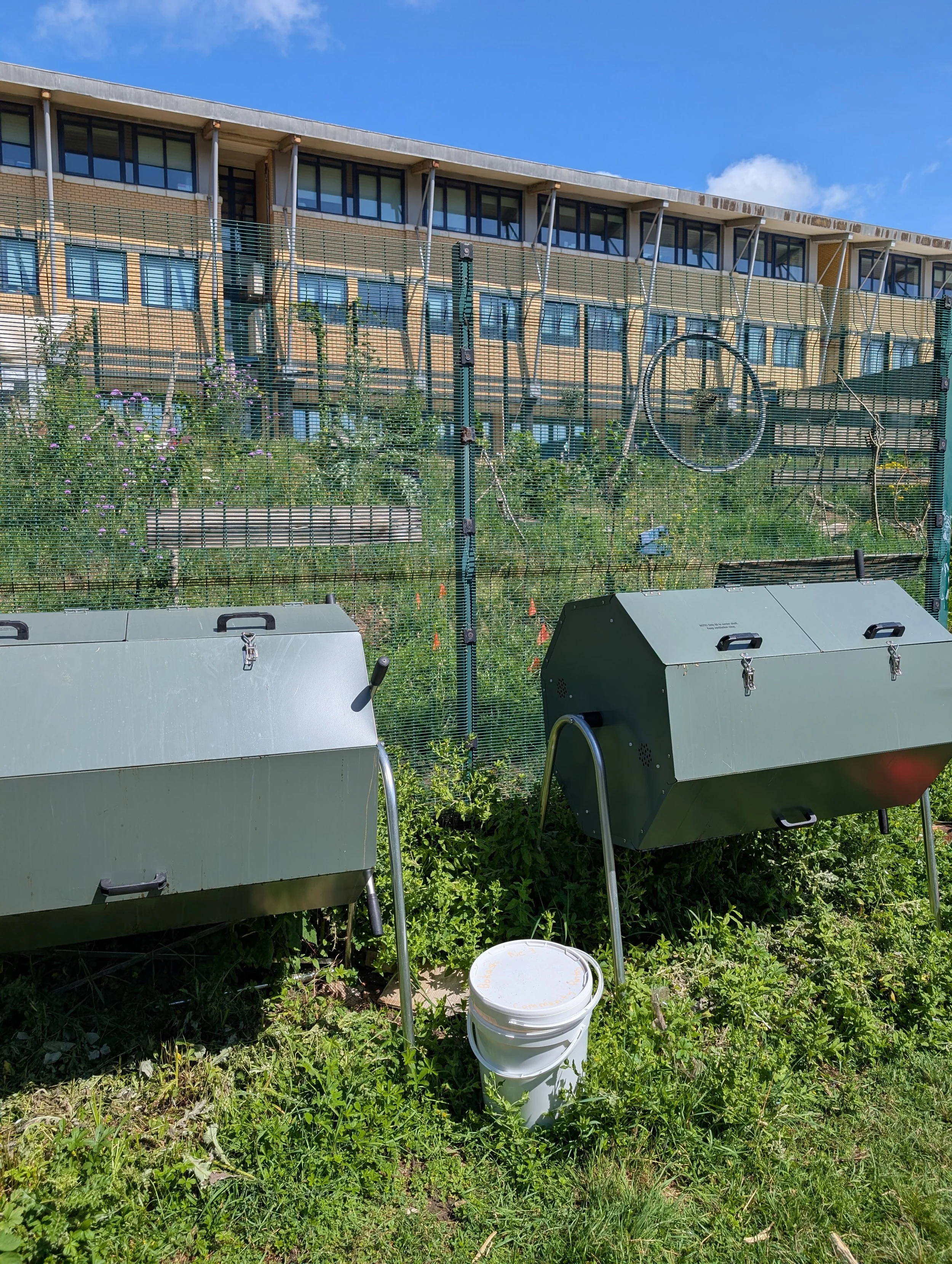
The composters at Future Growth, Mulberry Academy St Leonards
On this episode: stories from the food growers and edible gardeners of Hastings and St Leonards.
Town Grown is a Hastings-based food growers network and in June they organised an ‘Edible Open Gardens’ weekend, where food growing sites all over Hastings and St Leonards opened their gates to the public.
I took my recorder along with me and spent some time getting to know what it’s like to get your hands dirty in the soil of this part of East Sussex. We have an heirloom county orchard, a former Victorian private garden finding a new lease of life in the community, a very special plot on the site of a former secondary school cricket enclosure, and we’re beginning on Helgi’s plot in Marina Allotments, in West St Leonards.
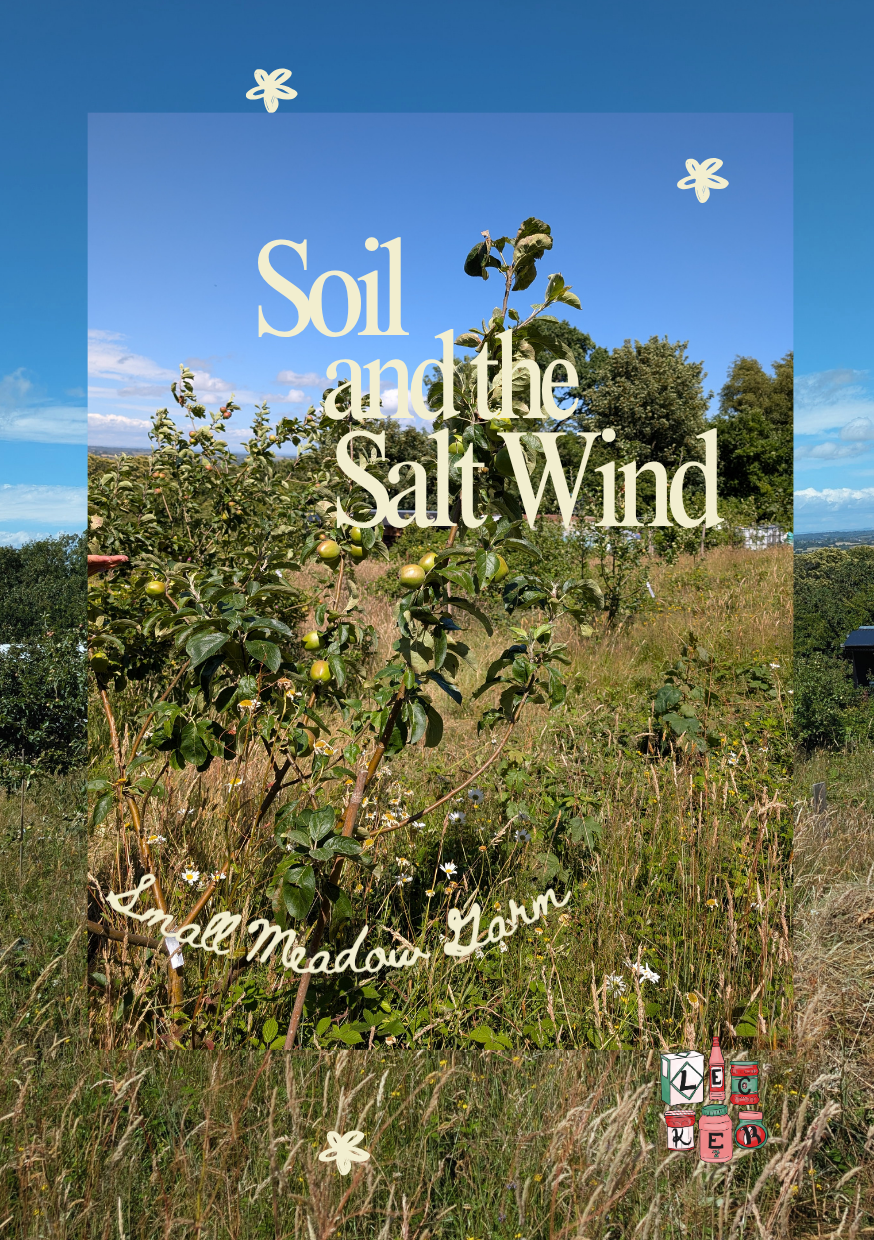
Download a free print-your-own zine for each story
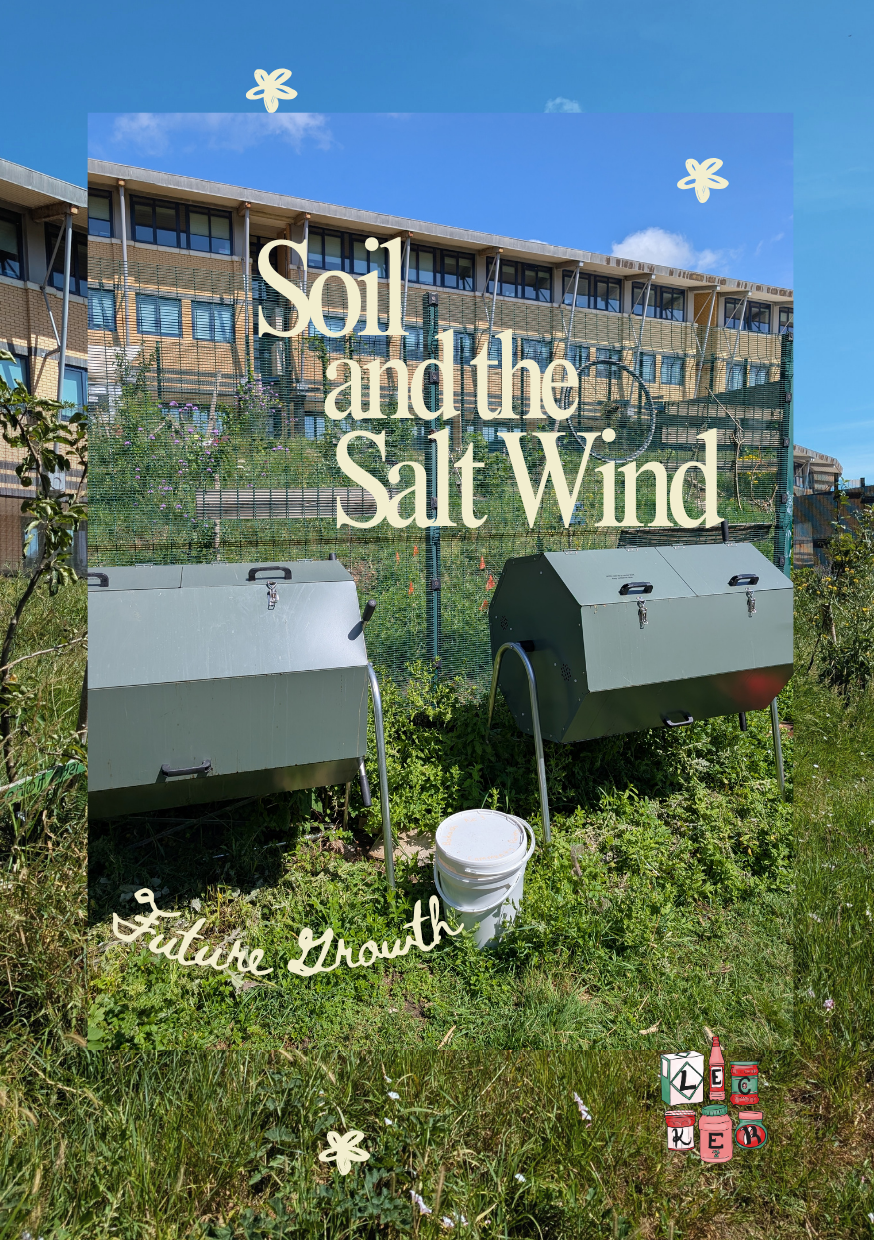
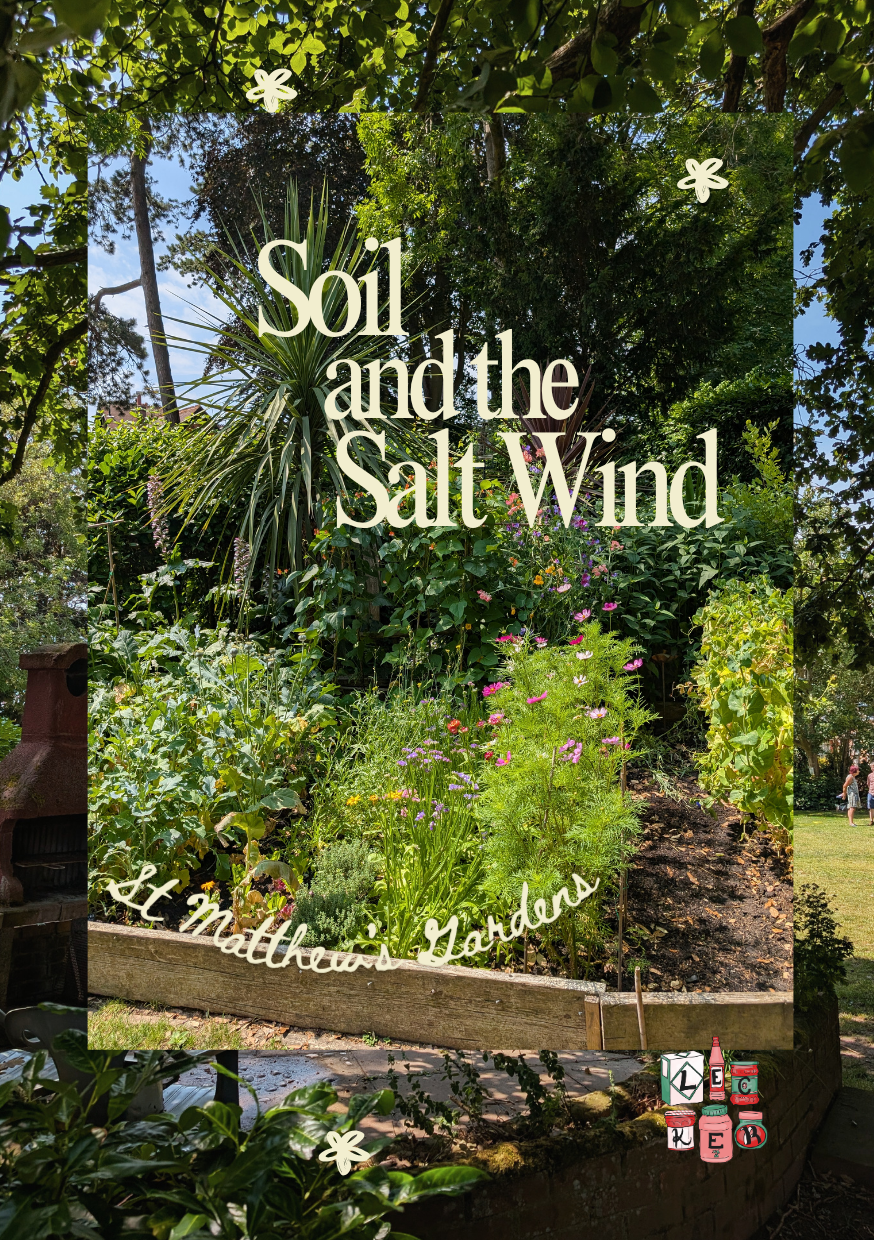
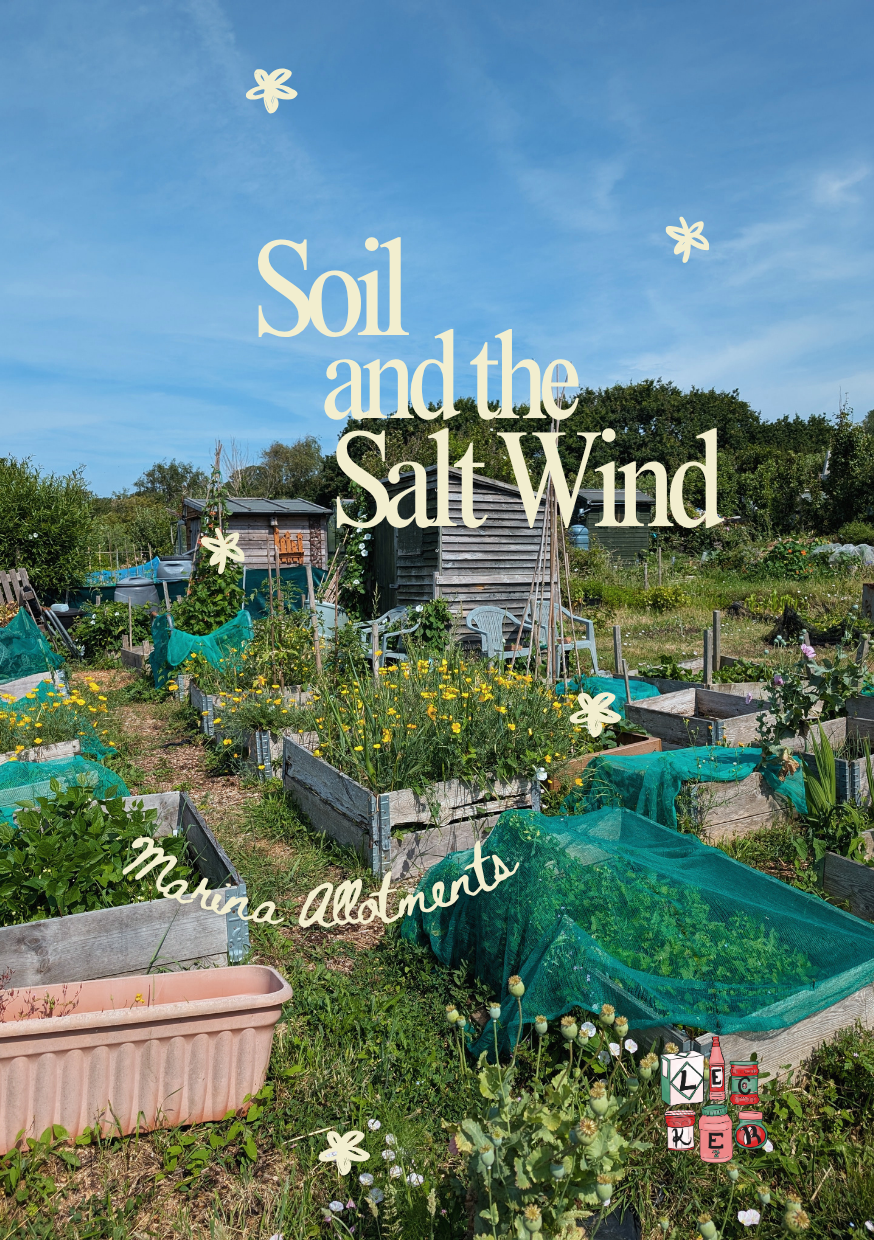
Find out more about each site
Marina Allotments is a sea-facing allotment site in West St Leonards. Locals interested can join the waiting list here.
St Matthews Gardens is a community garden with membership open to a catchment area in St Leonards. Find out more on Facebook.
Small Meadow Farm is a regenerative smallholding and orchard with wild camping and wwoofing opportunities. Read more on Anna’s website.
Future Growth is a food forest and regenerative allotment at Mulberry Academy St Leonards. You can find out more on Instagram and sign up to support the project on Patreon.
Lecker is a podcast about how food shapes our lives. Recorded mostly in kitchens, each episode explores personal stories to examine our relationships with food – and each other.
Looking for something else to read? Find all of the Lecker Book Club reads on my Bookshop.org list. [aff link]
Support Lecker:
Patreon: patreon.com/leckerpodcast
Substack: leckerpodcast.substack.com
Apple Podcasts: podcasts.apple.com/gb/podcast/lecker/id1158028729
Merch: leckerpodcast.com/merch
Listen everywhere: leckerpodcast.com
Instagram: @leckerpodcast
Music by Blue Dot Sessions
Transcript available below the embed
[00:00:00] Helgi: Good morning. It's about quarter to 10 in the morning.
[00:00:02] The heat's already rising. My name is Helgi Johansson, and I'm one of the allotmenteers here at Marina Allotments. We've got a great view down to the sea. We're just in West Saint Leonards, and, I was gonna show you around my allotment.
[00:00:17] This is Lecker. I'm Lucy Dearlove.
[00:00:19] I've got some like standard Earl Grey. Um, and I've also got a load of mint growing. So there's mint tea. There's also thyme flower tea. Oh. Um, I don't know. I could maybe that. Yeah. I've never had that.
[00:00:37] On this episode....I'm spending some time with the growers and gardeners of Hastings and St Leonards.
[00:00:43] Oh, absolutely. I mean, I don't think I've earned the title- ... of a lot drinker- Yet, yeah ... but
[00:00:54] Little bit of honey? Absolutely
[00:00:57] Town Grown is a Hastings based food growers network and in June they organised an ‘Edible Open Gardens’ weekend, where food growing sites all over Hastings and St Leonards opened their gates to the public. I took my recorder along with me and spent some time getting to know what it’s like to be getting your hands dirty in the soil of this part of East Sussex. We have an heirloom county orchard, a former Victorian private gardens finding a new lease of life in the community, a very special plot on the site of a former secondary school cricket enclosure and we’re beginning here, on Helgi’s plot in Marina Allotments, in West St Leonards.
[00:01:20] So we're starting at the back of the allotment, which is under the oak tree, so it's a really shady spot. So you can't really do much with it.
[00:01:27] You'll see the shed. I painted it black and red. There is a reason for that. So, I'm from Iceland, and, um, we have colorful houses. My grandmother was from the Faroe Islands, and we went to visit the Faroe Islands a couple of years ago, and found the house that she grew up in, which was, painted exactly like this, red roof and, black wooden timber walls.
[00:01:49] And so I thought, "Yeah, I'll paint my shed that way." And then the prettiness here is a blueberry bush. And that's in a pot. Yeah, so that's in a pot. They like a very acidic soil, so, try and make it a little bit more acidic, by putting loads of, loads of kind of mulch and fern clippings and things like that.
[00:02:07] Asparagus here beginning to grow. So that'll be probably a couple of years before I can harvest it. it's all trial and error.
[00:02:14] It's not all success. Um, so that thing there is an almost dead cherry tree. Oh. Um, it wasn't very happy in our garden, because it's a very sea-exposed garden, and it's certainly not happy here. And, I've basically given it, a final warning. And if it doesn't perform this summer, which it really isn't, then it's going to be, chopped down- No, it's not-
[00:02:36] this winter ... looking very happy, is it? No, it's looking terrible. Quite embarrassing. But next to it is a fantastic plum tree. That was here already. And last year it produced about four plums. But this year it is absolutely dripping. There's a few leaks growing. Tomatoes and aubergines at the back, enjoying the sunshine and the slight shelter there.
[00:02:58] Some chilies coming up there. Up there. And, uh- Oh, yeah ... what kind of chilies are they? Uh, those, uh, were actually from one of my allotment mates here, Fred, who just bought some chilies in the shop and- Oh ... um, and planted the seeds. Then Maria, another allotee here, gave me some, chickpeas, which are those frondy things at the back there.
[00:03:19] So we'll see what they do. And then there are some random sunflowers at the back The onions have been terrible. The badgers got in there, dug a load of stuff, disturbed them. They didn't like it, so this embarrassment of a bed is the onions. But the Loganberry at the back is doing very well. And then we get to, the Jerusalem fartichokes at the back, which my friend Leanne said, and she gave me some of them, and she said, "Well, once you've got them, you'll never get rid of them." Which is probably true. But I do love them, and make soup and stuff like that- Mm ... out of it.
[00:03:54] Tomatoes in front, bit of a squash, more chilies. Gooseberry, raspberry. More tomatoes, more tomatoes. And then round here there's a big apple tree at the front of the allotment. So we've now gone all the way along one of the ends of the allotment and so got to the, the front bit of it, which is the apple tree.
[00:04:13] Few other things kind of growing down there, some strawberries. Salsify at the end there, was self-seeded. So I'll look forward to tasting the roots, this winter. That's fun. Yeah. Yeah, yeah. I've never, never tried it.
[00:04:26] And then I planted some vines growing up the greenhouse. Oh. Which I'm not expecting much of this year, but there are- Tiny little grapes there. Yeah, there are f- there are about five bunches of grapes there. Obviously I'm planning on doing small batch kind of dessert wine or something like that.
[00:04:42] Obviously. Very small batch. Like one- One glass ... one bottle. Well, I might get a bottle out actually. Yeah. Some aubergines down here. Now next year I must set a reminder during the whole of May, saying, "No, it's too early. No, it's too early. Don't plant them out. It's too early." Probably for every week in May because as you can see, the ones that I planted out really early are just rubbish.
[00:05:05] Oh. Whereas the one down there, I've already harvested one. And that's much, much happier. Yeah, it's about three times the size. Exactly, yeah. Even though I started it later and, and planted it out later, so. Very interesting. Yeah. So don't plant things out too early,
[00:05:21] Then I've got a few, sweet corn. Some courgettes, some squashes, and some beans growing up the side. Supposedly the three sisters. The beans, are nitrogen fixing, so there's bacteria in the roots of the beans that, fixes nitrogen.
[00:05:35] So essentially they self-fertilize. And so if you plant them next to other plants, the other plants will benefit from the extra nitrogen that's in the soil. And then the squashes kind of cover the ground and, and give you weed control supposedly. They haven't covered the ground yet, but hopefully they will.
[00:05:52] Again, I planted them too early. And then you've got the sweet corn in the middle. It's a kind of South American way of planting.
[00:05:59] Potatoes have been a bit disappointing. They've recovered a bit now. I think it was just, I think May was too hot for them. Bit of lavender around the side. So it's on the, on the southwest side. So our prevailing winds, being Hastings, are from basically down the valley. We can see the sea from the end of this valley. The allotment, are basically nestled in this valley, and going down to the sea, which is absolutely wonderful and looks idyllic, but when the west wind blows and when the storms come, then they come directly up the valley and they hit my beans.
[00:06:33] So I'm trying to get some lavender and things like that in the borders to try and protect the beans, a bit more.
[00:06:39] I think my most fun things that I did last year, is dealing with a glut.
[00:06:44] So your glut of tomatoes, glut of chilies. I made a, Tabasco-style, tomato and Tabasco sauce, and so fermented it. It's actually phenomenal. It tastes so good. It's just a secret ingredient that gives a load of umami and wonderfulness to ... And a bit of kind of rich heat, but not the sort of blow-your-head-off- Mm
[00:07:04] type Tabasco sauce heat that, would actually put me off most of the time. And I also fermented the plums. And the apples. And then I distilled it, and I made, a Balkan-style rakia, or raki, out of the plums. Which actually I thought it would taste really rank, but it didn't.
[00:07:24] It tasted all right. And then I did the same with the apples. Now, I hate cider. I love alcohol in general. But cider is the only form of alcohol where I'd rather choose to stay sober than to drink it. But, I distilled that as well, and I made calvados.
[00:07:40] And the calvados was really tasty. The only thing you need to be careful of is because there's pectin in both plums and, apples, when you distill it, - that turns to methanol, and the methanol comes off first. So you need to discard the first part of the distillate, so that you don't go blind and get methanol poisoning.
[00:07:58] So, had the house, well, initially, the upper flat and then, we bought the whole house and turned it into one house. Had that for the last 20 years. But also have a flat in London, and my work is in London. Although my husband's almost retired- Oh, yeah ... and, he spends a lot more of his time down here.
[00:08:15] Yeah. Because it's phenomenal. I'm very much a morning person, always have been, ever since I was little. Used to really affect my parents when I'd crawl into bed with them and demand to be read to at 4:30 in the morning. And of course, in the summer in Iceland, there is no darkness, so the sun's, sun is basically shining from about 2:00 AM, till midnight.
[00:08:39] So I got the allotment here, a couple of years ago, or nearly two years ago September, which is actually a really good time to take on an allotment. So if anyone's thinking about it, September is your sweet spot.
[00:08:50] The growing season is over. And especially if the allotment is in a bit of disarray, then you've got the winter to, um, to And so mine was just full of couch grass. There was nothing discernible here. And so it, it took a lot of blitzing. It's been hard work, but it's been really quite amazing. I may have got a little bit obsessed by it. Maybe, maybe.
[00:09:11] The weather is both a challenge and an advantage because it very rarely freezes here. Because even when it's cold elsewhere, you've got the ridge that protects us from the north wind, and you've got, the sea, which is always warmer, and so protects us from the frost.
[00:09:30] We had a couple of frost this winter, but they were very mild. Although one of them was in May, which was super annoying. But then you've got the storms and the salt wind, which a lot of the trees and legumes and things really don't like. So trying to get some sort of shelter in is really helpful.
[00:09:50] My other challenge has been, I think because this allotment spot was neglected for a couple of years, was the soil. The soil was really quite poor. It's clay. You're under the oak tree, so the oak is very thirsty and drinks out a lot of the water in the soil, so it dries out quite quickly. And my main winter project for the last two winters has been to improve the soil, dig in loads of organic material.
[00:10:18] Initially, I went for a no dig approach, which in retrospect I think works perfectly well if you've got soil that's already good. Whereas if you've got bad soil, then it takes a very long time for it to improve. And so I've kind of decided to go for something somewhere halfway between rather than an absolute no dig or an absolute dig.
[00:10:42] For those beds that are, have good soil in them, I'll make them no dig, and those beds that are poor, I'll, dig the hell out of them until they get better.
[00:10:51] So I've had a garden for a long time. I'm trying to think when I got my first garden. Uh- Did you garden in Iceland? Not really. Although I grew up, for the first nine years of my life in the east of Iceland in a one-horse town called Egilsstaðir, which is actually, the biggest thing in the east.
[00:11:09] But at the time, it was a village of 700 people. And my mum went to work, and I was at a childminder's, called Sofia, and she had a big vegetable garden down at the bottom of her garden, growing potatoes, kale, and the sort of things that grow in Iceland.
[00:11:25] But then I got my own garden, I think probably '94, when we bought our first house, while I was at med school. And then, uh, there was a bit of a change in my life, blah, blah, blah, blah. And so I stopped having a garden for a while, but then got another one in, probably about, '99, 2000.
[00:11:46] And I've had one ever since really, it's just become part of what I do, and I just get a lot of, a, a massive kick out of growing things and eating the things that I grow. I probably spend a lot more money on it than even if I went to the most expensive organic greengrocer, and bought the vegetables from there.
[00:12:04] I would, I would probably still save money compared to what I spend on this. But actually it's highly entertaining, and very satisfying.
*******
We’re moving up the winding hilly streets of St Leonards, away from the sea to a lush garden in the middle of a square. St Matthews gardens used to be for the exclusive use of the Victorian residents of the square, complete with its own tennis lawn. But now things are a little different.
[00:12:15] I'm Will Taylor. I grew up in the area of St Matthew's Gardens. My parents still live here, along with my sister, and, when we had the chance to move back into the area, I was all over it because, yeah, I loved the gardens growing up as a kid. I've always felt that this is almost like my, my spiritual place.
[00:12:33] Did you come here as a kid? Yeah, yeah, we came here as kids, back in '88. So we'd just had a massive storm, like it was the hurricane- The storm of '87, yeah ... yeah, the storm of '87. I've heard about it, yeah. Massive hurricane that Michael Fish got completely wrong, and, said, "Don't worry about it." But, um, they were trees down everywhere. Around the perimeter you'll see that we've still got a lot of Austrian pines. Mm. Originally, the gardens were surrounded by them, so you get a sense for the scale of the devastation that hit in '87. Yeah. But for a kid, it was just a magical playground.
[00:13:06] so I'm Jenny. I'm Will's wife. And I'm the lead gardener here, so I, I, I do ... I manage all the gardening.
[00:13:11] We moved back in 2013, and, during that t- period of time, there'd been a lot of volunteer efforts, to tidy up the gardens and make it back into a more usable space.
[00:13:21] It was laid down, by the Victorians- Late 18- yeah, late 1800s ... um, for the enjoyment of exclusively the people of St. Matthews Garden. Of course. Yeah, there were actually a number of these pocket parks, private gated parks, across Hastings and St. Leonards. So we've got all of these interesting little spaces, and, I think that it's, a crime not to share them out with the community.
[00:13:42] Actually, during lockdown it was a godsend- It was- ... for a lot of people ... a lot of people.
[00:13:47] A lot of people used this space because they had to have, I mean, we forget, don't we, but that you had to have an open space to go to within walking distance. Yeah. And so people were desperate- Yeah ... to find somewhere they could go. You know, of all the, the negatives of the COVID period, I think people started to appreciate their local green spaces a lot more as a result of, of, of sort of stopping and looking around and, and finding these little, these little spaces.
[00:14:11] But yeah, in terms of the history, so, um, it was very formal, I guess. We, we actually don't have any photographs of what it was like in Victorian times. Which is really shame. We've, we've scoured, we've scoured. We have had a couple of super keen metal detectorists, that came over over time, and, we've got some great finds.
[00:14:28] Which shows the use, Right through the whole period ... since the Victorian period. And actually, some older stuff from when it was farmland. it- Oh my God ... we, we, Portable... We sent it off to Portable Antiquities, and they analyzed it and sent it back to us. So this was all farmland at, at one stage. And then sort of, it's always been a place where kids have played. We've found loads of kids' toys, old, old, uh- Yeah ... lead toys and things. Yeah, like, uh, Dinky toys and stuff like that. Well, we found like a mini pistol. Yeah. And, uh- Little trucks and- Yeah, little trucks ... figures and things ... and, um... Oh, cowboys. Cowboys, yeah. Yeah, metal cowboys. Yeah. So, you know, that dates it to- Cowboys ... about the '50s when some- a kid lost it. And then then during the war, this was used as a training ground for the Home Guard, and a Canadian regiment that was, stationed locally. We've got sort of vague bits and pieces of history to that, but we've confirmed that because we found rifle bullets.
[00:15:20] Yeah. Spied wire rifle bullets. Yeah. I can't remember what the caliber is, but they were definitely Home Guard caliber- Wow ... 'cause they were from World War I. So they were using the World War I rifles in the Home Guard. And, um- So all the old guns- Yeah ... were given to the Home, Home Guard, and the new stuff went to the troops.
[00:15:35] So yeah, yeah, so... And then after that, it's just been used as a sort of a family recreation space. Yeah. It was handed over from, what's the trust? So Eversfield Trust own- Eversfield Trust ... they own a lot of the land around here. Yes. Yeah. Um, so, so it's in the deeds of all the houses.
[00:15:50] It was gifted in perpetuity to the people- Gift- gifted in perpetuity ... of St Matthew's Gardens. But in the 1960s, it was asked that the management of the gardens transfers to a committee. And, um, that is where- Wow ... you know, the, the purpose of the space really changed. We just built on the foundations that were already here. We've had a lot of very proactive people who have had a real passion for the gardens and we've just added to that.
[00:16:13] And our previous chair, was very keen on, on sort of bringing in the community. And again, we've, we've taken that forward. We, so we have a lot of- Yeah ... local school parties and, and that sort of thing that come and use the gardens.
[00:16:25] Most of the houses have been- been converted in this area. There are still some which are 100% intact, but, you know, there's people- Sure ... with, uh, with flats very, very much so in the, in the, uh, sort of nearby area- Mm-hmm
[00:16:39] Who all need green space. Mm-hmm. So we, we just took the view, over time that, yeah, the catchment area, although we are clear as to who is within that, we are quite flexible with it and quite nice with it. And we try to keep our memberships a- affordable- Yes
[00:16:54] for people too. Yeah, that's the big trick of it. And we have, the local scouts and the guides and the local school that come and use the space. Sometimes the schools come over to draw the flowers, which is lovely. Sometimes they come over for a bee talk f- about life cycles, and then the kids will wander off and try and find little insects in the undergrowth just so they can catalog it. I love seeing the space being used for that.
[00:17:16] And I was the one who started the food growing.
[00:17:19] There was a few things here that could be eaten, but there wasn't any real community food growing here. That's my contribution, I suppose, is to introduce community food growing. And, so now we have community orchard. We planted a walnut tree, which we won't see the fruit of, but hopefully the- But it was great 'cause we did it with the kids
[00:17:34] the kids planted the tree. And the kids- Yeah ... the kids were so excited with the idea that, you know, when they're old and gray like I am, they will probably see walnuts on it. Um- So what's the timeframe on that? Oh, it's gonna be about- That you might see fruit ... 30 to 40 years. Oh, wow. Well, sometimes, sometimes sooner.
[00:17:49] Depends how well- ... the walnut tree does. I mean, sometimes within 15 years you can get- Wow ... walnuts. But I mean, really- I reckon- It's a long game ... I reckon it's a long, long game. Become a... It's 50 years for it to become a mature tree, so, um- Yeah ... yeah, yeah. So, so that one's... But then it's, it's, it's planning for the future.
[00:18:05] But that's the wonderful thing about doing this all. it's Not about what we're getting from it at the moment. We're just building and building and building and giving an opportunity. And some of the things that we've done have been- Not for our benefit. It's been for the benefit of the wildlife, the area, so dead hedging, wildlife paths, creating a specific area where we let those, uh, those pesky weeds, or what people would term as weeds, grow because they are absolutely critical, for insect life and for other, small rodents and- Yeah
[00:18:38] what have you. All the things that build up the, the natural dib- the biodiversity- Yeah ... of, of an area, so. And we've seen that increase drastically- Yeah, we've now got lesser stag beetles living Oh, I was so excited. I know. Jenny got hit by one, and "Oh, brilliant." It flew into me. I was like... So excited. It was- Yeah, that's a big deal. That's- Yeah. It is. Yeah. It is. Yeah, we'd like the big ones. Yeah. We'd like the proper greater stag beetles with the- Yeah
[00:18:58] with the lovely horns, but we'll take a lesser stag beetle. Yeah. That's fine. That's fine. Lesser in name only. Yeah, exactly. Exactly. They're still beautiful.
[00:19:05] So the community food growing, again, we try to involve the members.
[00:19:08] We try to involve the kids as much as possible. So I grow a lot of veg that kind of isn't... it never makes it to the dinner table, basically. So peas are a massive hit.
[00:19:19] You can't get a kid to eat a pea at dinner time, but if they pick it off a bush, that's it. They want it. Raspberries is another winner. Yeah. Oh, yeah, the raspberries got picked clean the other week- Yeah, yeah ... when, uh, when they all discovered them. Um, and then so we've, we've, yeah, planted a little orchard. The s- fruit trees that we've got, we've got, Orange gauges, plums, pears, apples.
[00:19:40] They're all quite young trees, but they are producing and then gooseberries and b- blueberries and, somebody gave me a goji berry plant, so I've- And it- Yet, yet it, it- Surviving? It's surviving. Yet to produce any fruit, but, uh, we had a few fr- we had about two on it last year. What about your elderflower where you made- My elderflower
[00:19:56] the elderflower champagne? Yes. Ah. Yeah. We've got elderflower, so I make, I make elderflower champagne every year.
[00:20:01] Where we've been trying to increase the biodiversity and the natural, sort of, wild stuff, there's tons of edibles that, that, you know, could be forageable edibles that, that pop up. So we have wood sorrel, loads of wood sorrel. Ah. We We actually have a log that produced chicken of the woods last year.
[00:20:18] I'm gonna see whether it- You weren't feeling daring enough I'm not, I wasn't daring enough- ... to eat it. I was pretty, I was pretty confident in the identification. Something ate it, though. But it's just- It's kind of nice to know. Amazing. Yeah. It's kind of nice to know, yeah.
[00:20:30] it Gives us a great deal of, peace, I think. Mm. Peace and, and sanctuary. And other members have said the same thing. You know, it's a place that they can come where they feel- You know, it's just they can take time away from their busy lives, even though we're right in the center of town.
[00:20:44] has changed so much in the years which I've been part of it, and I only see myself as a passing steward- Yeah ... of the space, but it's important that we keep it looked after and maintained. Yeah. And if we can improve it and make it more relevant to people over time, then let's do that. Yeah. And the usage of the garden- Yes
[00:21:06] has increased dramatically since I was a kid. Yeah. It used to be mostly, just people jumping over the fence. Nowadays it seems to be, because we've got a large membership and, we've got people that genuinely, respect and, Care about the space ... care about the space. Yeah. Thank you. Mm. It's just a wonderful place to be.
*******
Just out of town to the East of Hastings, down a tiny track wide enough for one car at a time, is a plot called Small Meadow Farm. All sorts happens here: from permaculture education to off grid camping. But I’m here for one particular reason: apples (and the odd pear and quince).
[00:21:25] So when I arrived, it was covered. I've got four major infestations here, thistles, the big marsh thistle. They're giant. They look like warriors of, you know, like, they're just really menacing.
[00:21:40] Ragwort, which is obviously quite an invasive thing, that you have concerns about with, like, cattle and things like that. It's poisonous sycamore, which are those tree seedlings they're very prolific. And brambles. So what I inherited was these four weeds, basically.
[00:21:59] So my name's Anna, AKA Permaculture Anna. I was a community gardener in North London and just really got bitten by permaculture. And, with that kind of sustainability lifestyles and, you know, systems thinkings and all the rest of it, it's also experimentational that I was like, "Just wanna put all this into practice."
[00:22:23] Mm-hmm. And then it's very much get back to the land, get back to our roots as humans. It's not really anti-capitalist, but it, it kinda ends up being a bit anti-capitalist. You know, it's like looking for a new way, permaculture is about that. I would say it's a kind of experimentation into a new sustainable lifestyle.
[00:22:44] You know, how do we not rape and pillage nature, but do everything maybe like we used to traditionally. Anyway, I was obsessed with it, and I sort of still am.
[00:22:55] But 'cause I was a gardener and I was doing loads of forest gardens, and I was like, "Oh my God, this is the, the easier way to grow food." I was like a food growing activist, so I'd go around community centers and hostels and schools and teach people how to grow food from seed But, you know, that is a, that's a harsh journey compared to setting up a forest garden or a forager's garden, which is what my book is called.
[00:23:23] We're here. I've always been in love with Hastings. I always was gonna downsize from London, and when I downsized from North London, I bought this field. Mm. Which at the time was less than a studio flat. And I was just there, like, pinching myself going, "I don't believe this. I don't believe this."
[00:23:43] But you know, I was so driven, and it was a dream, and I just kept working towards my dream, and it took 15 years. So now I've ended up on the outskirts of Hastings in Fairlight. It's a 10-minute drive, and I'm here every day. Mm. Just sort of having this great relationship with a piece of land. And tell me about that piece of land as it is now.
[00:24:08] What, what was it like when you arrived, and kind of how, what have you kind of, how have you worked with it over the years?
[00:24:14] So it's four and a half acres. One acre is in a wooded area. But out on the field about a third of that was brambles. And the brambles were three meters tall. So I was like, "Gulp, how the hell do I get rid of these brambles?"
[00:24:31] And I had a meadow expert 'cause like I was within these networks of like Weald, know, the Lund Fund and High Weald. At the time it was called The Meadows Initiative. So this guy came for free and he was like, "What you wanna do is get a tractor, claw off the three meters of brambles, burn them. Get this thing called a harrower," which is like a sort of chain, on the end of a tractor that kind of rakes it up a little bit. "And then stick some sheep on it." So yeah, I was from Central Camden. I was like, "Okay, sheep. Okay, sheep, sheep." Never really had a pet in my life, apart from a cat I had to give away.
[00:25:17] So, I just Googled, and found on Preloved some Hebridean sheep, and that's how I got started with the animals. And I'm still the worst shepherd ever. But I have learnt some basics along the way, and they were only supposed to be here for three years, but this is, I think, eight years after getting them.
[00:25:36] But the good thing about Hebrideans for me is they're not very friendly and they won't let you touch them.
[00:25:42] Oh. And considering I can't catch them, that's a good working relationship that we have. So yeah. It's a low-maintenance, off-grid way to manage pasture. This is an acid grassland environment. Mm. And it's a rare environment. I was already very passionate about wildflowers and the fact that 97% of our- wildflower meadows have gone. And, so before I came here, there were two things, well, three things I knew I wanted to do.
[00:26:15] One, guard the wildflowers. Two, plant an orchard. And three, experiment with loads of forest gardens. And also water is the hardest thing. So I thought when I first got here that I wouldn't be able to harvest enough. Fact is, I've got eight IBC tanks, so they're those m- meter cubed- The big, yeah ... big things. They probably overflow about eight or 10 times over winter. So there's a lot of water that I'm not catching. Like I wanna catch it at the top. So this is a big slope. So, you know, everyone was like, "Oh, God, it's so slopey." And I'm thinking, permaculture brain, that's a great thing 'cause I've got gravity and I can move water, you know?
[00:27:00] And I've got the trees and shade. And I kind of designed the land along contours. So, you know, permaculture is also, like, where you put things in relation to other things. this middle bit of the land, which is relatively flat, is the social area. The orchard's here. The polytunnel's around here. The kitchen's here. This is always full of life, and people coming through, and cups of tea.
[00:27:25] It's like you're trying to get to this holistic vision of integration of everything that you're doing so that everything's in the right place and you don't have to work so hard, you know?
[00:27:37] There were so many rabbits. So first, I knew from a previous project that I probably should just rabbit-proof it.
[00:27:44] And in the early days, it really makes me laugh because, we'd enclosed the orchard, but there might have been rabbits there. So I actually got this, um... What are those animals? What are those animals? Ferrets. So this woman came with a white ferret, and she would just come because she wanted to feed her animal.
[00:28:04] So she, like, turned up and, um, put them down all the holes in the enclosed bit. Oh, my God. But she didn't get any. Okay. So, yeah. So I enclosed it, and then I chose some amazing traditional varieties and I planted it in two, phases. So, because at the time I had no water. Mm. And we were literally bringing it in in vans, from an industrial estate, and it was hard graft.
[00:28:31] And then, a few years later, I got the Lund Fund for the Sussex Varieties Orchard. Well, I've got this amazing book called Apples and Orchards in Sussex by Brian Short, and, one of the co-writers, Peter May, I was friends with on another project.
[00:28:51] He'd, like, grafted into a garden in a forest that I'd done. He's mostly related to the permaculture crew in Brighton, and he really helped with Stanmer Park and developing that, and grafting all the Sussex varieties there.
[00:29:07] He is the guy who has all of them. But at the time, he only had 22. So, I bought 22 of the varieties off him as trees, beautiful trees. And then for the other ones, I planted just the rootstock in the place- Mm ... where the tree was gonna be, and he came. And I'd done grafting where you take, like, a stick and you put it onto a rootstock.
[00:29:34] But his grafting was like, he just took one leaf bud out of the stick that was in the ground. You know, it just looks like a tiny little eye in, in the bark of the plant, and he took the tiny little eye of the tree that we were grafting and did the surgical procedure with great precision, and put a bandage round it, with the sharpest knife in the world.
[00:30:01] The whole tree has grown out of one little shoot. It's amazing. And you said that the collection isn't actually complete. There are four missing varieties- Yeah ... that people aren't able to find. Is that right? Well, I think they know where they are, but I think just when I was developing the orchard, I just couldn't find them, you know?
[00:30:20] So there's, there's space for them. So yeah, I mean, it's been such a journey because, one, just how popular apples were. Mm. You know, they were just, like, something that people would talk about, like celebrities. Can you imagine now? People don't talk about apples for more than about five minutes. there's So many subtleties. You know, whether it's, like, a nutty flavor, or, like, a white flesh, or it's got, like, you know when you get like streaks on a cox, they're like streaky things, or you get ones with flecks in it, or, you know, they'll, they'll be, describing them via the lenticels of the apple skin.
[00:31:00] But for me as a cook, I'm like, "Can I make apple sauce?" Some of them will just fluff up in like 10 minutes. You're like, "Whoa." Or, you know, is this gonna be like a French, pear, you know, a apple or pear tart, so you need something that won't go mushy. And then for me, the, the amazing thing has been like the dual apples.
[00:31:20] So some are cookers and some are eaters, but there's this huge amount that are dual, and it's just like getting to know their individual personalities. Yeah. I'm just on the beginning of a journey. And we'll do an apple day, so part of the Lund Fund was me doing outreach and teaching people about these traditional varieties.
[00:31:41] And now that I can, I'm like thrilled. We've got apples from Bexhill, Brighton, Hastings, Eastbourne, near Camber Sands, then over towards like West Sussex. there's just this whole world out there that we've forgotten about.
*********
If you get the train on the Charing Cross Line into St Leonards, just before you get to the town a big expanse opens up out of the east side of the train: a school field. And if you know what you’re looking for, in the far corner of the site you’ll spot a densely growing section behind some fencing: in contrast to the empty grass of the rest of it.
[00:31:58] I suppose before, before all the magic began, it was kind of a, a bit of a waste corner of the school grounds. So we used to have some cricket nets here. But those have been out of use for quite some time. So we've got the inc- oh.
[00:32:11] Oh, no. The brambles are saying hey
[00:32:17] Need a hand? There we go You got it? Fine, I'm away. Cool. Uh, oh, there's that train. Oh. Oh, yeah. Uh, will that be audible? Yeah, but I quite like that. Okay, cool. So we've got a, a small enclosed area that used to be used for cricket training. And that forms our allotment, and then there's kind of a, a bank above it, most of which is not ideal soil for growing in.
[00:32:39] Hi, I'm Elliot Riley. This is the food forest from Future Growth at Mulberry Academy, St Leonards, which is a, a reasonably large state secondary school on the southeast coast of England in Hastings.
[00:32:55] So I have been growing with the kids here. We are now approaching the end of our second full year, of Future Growth. We planted a few trees, the year preceding that, and there have been ongoing, kind of food-related projects on this site for a- about a decade, I think.
[00:33:14] So there were a couple of raised beds when we arrived. Project Rewild had done some work here. They've done some work in-house. Uh, but as Future Growth, we've been running full time for just coming up on two academic years now.
[00:33:25] So the site is divided up into kind of two main areas. We have a regenerative allotment, where food is grown in soil that is pretty much made out of waste materials. So we've got coffee from Stooge Coffee Shop. We have lots of mushroom-inoculated sawdust, which comes from Basil's Fungi Farm. He gives us all of his waste. And we also turn school food scraps into compost. So we grow lots of vegetables there. We then also have a food forest on the bank above the allotment where we are growing a regenerative food forest in soil also enriched by waste materials. So we've got a member of staff, called Jake, who has been doing amazing work in the last few months by frequently visiting some of the local supermarkets and bringing the food that they no longer want to stock, but is still absolutely legal for consumption, bringing it into school to distribute, amongst kids who will benefit from it.
[00:34:24] And then anything that does then not become able for consumption becomes our compost. So our food is being grown in the waste food produ- that is provided by the supermarkets, absorbed by the kids as far as possible, and then anything extra goes back into soil production here.
[00:34:43] And most sessions, the kids will come to me, and we'll spend maybe 10, 15 minutes having a chat, having a catch-up in the classroom, and working out how everyone's mood is that day.
[00:34:53] Are they feeling stressed? Are they feeling depressed? Are they feeling anxious, irritable, gassy? Whatever's going on for them. We'll then come down to the garden and I will introduce the students to a new skill, whether that is sowing seeds, whether that's weeding, whether that's using chop and drop techniques in the food forest, whether that's propagation, whether that's sign painting.
[00:35:16] And then the idea is that each time students learn a new skill, that's kind of added to their, to their arsenal. They can come and say, "No, I don't wanna do weeding today. I want to keep building the keyhole bed that I did the last week, 'cause it made me feel focused, and the hammering was a great way to get out some of my anger."
[00:35:34] Or they might say, "Actually, I'd real- I'm feeling quite low. I'd like to just sit and do some weeding." So the provision is first and foremost a wellbeing provision, where the kids are given a smorgasbord of skills that they can use to improve their mood. But the output of those skills is food. We're growing, growing vegetables, and we're also building a, a thriving ecosystem which will produce fruit for the next 80 years, hopefully.
[00:36:04] Sometimes they will just approach us through the fence and be like, "I wanna come in." And we start a conversation through that. Otherwise, there is what is called a boost referral process, which is just one of the wellbeing mechanisms that exists within the school.
[00:36:17] If a kid is struggling with their grades, if they're struggling with their mental health, if they are having a hard time one way or the other, they will be referred through the boost process. Future Growth is one of a number of outcomes of that process. So students are referred to me because they've got poor mental health ... generally that's it. If they're not self-referring, it's because they're struggling with their mental health. And the students who have expressed an interest or potentially would benefit from a positive male role model- Mm ... or clearly need the opportunity to- Be able to learn to reembody themselves, but find PE an overwhelming experience, they will come to me.
[00:36:55] And because it's instead of their PE, that means that by default students are with me three times a fortnight. Um, so they'll have kind of three sessions of 100 minutes, which begins out as lasting for a term. But some of my students have been with me for the best part of two years now.
[00:37:14] So for the most part, there's kind of a, a natural selection process. But it means we've got a really kind of, a really nice contingent of kids, some of whom have, have kind of been with me for quite a long time now. And they go by the term FGOG, which stands for Future Growth Original Gardener.
[00:37:32] When I was at school, I was initially very keen to join the army. Um, but had quite m- kind of... Basically, as a person who's quite cynical, had what I could only describe as a thunderbolt God moment, where this like...
[00:37:48] I saw this flash of light and a voice in my head being like, "Yo, don't kill, man. Life is enough." And I was kind of like shaken to my core and like whether that was a psychotic break, whether that was God, whether that was me, I'm gonna, I'm gonna trust this. This feels pretty loud. This feels significant, so I'm gonna trust it.
[00:38:06] I then went on to do my degree in history and philosophy at university, which I adored, really enjoyed. And through that process was kind of set up with a nice cushty Shoreditch post-grad job in an ed tech company. But then the pandemic struck in my third year, and suddenly all of these topics that I'd been learning about, you know, alienation from land and shifts in power, all became very apparent that these weren't historical topics.
[00:38:39] We're still living through them. And I saw global supply chains fracture overnight, and my entire world was suddenly shaken. I was like, "This stuff is not resilient. We don't have this skill set there." So I realized that I wanted to be doing something more meaningful, but didn't know how to begin.
[00:38:57] And I suppose the other important bit of context with this is that I was fortunate enough to get an enormously discounted place to a very good private boarding school. I also got a massively discounted place to a very good private university. So not only was my thinking, I don't know what to do, but it's... i've received on paper one of the best educations in England, and therefore on paper one of the best educations in the world, and I don't know how to make a grown-up decision for myself.
[00:39:29] What is wrong with this picture? So I suppose with those two questions in mind, I kind of went upstream. It was during the pandemic and I had the time, so I was like, okay, how have we got to a stage where the world is so fragile and where education does not give us the skills to develop resilience? And through that process, I learned about a school in the Dominican Republic called the Human Hive.
[00:39:52] And these guys were a trauma-informed, learner-led school who at that time were teaching a module on permaculture. And I was like, well, I can either stay in my dad's flat in Bexhill during a pandemic, or I can go and volunteer in the Caribbean learning about all the things that seem most important in the world.
[00:40:10] In hard terms, they were building a food forest. You know, I wasn't aware of permaculture. I wasn't really aware of these, these systems. So I just saw them transform this kind of like dry, hydrophobic, broken bit of land at the back of their school pretty much overnight into this thriving, abundant system that was absorbing water and absorbing waste and kicking out food and biodiversity.
[00:40:36] So I was like, "This is sick." Like, "This is really exciting. I wanna learn how to do this." So what I'm doing here is in many ways what they were doing without the mangoes. we have planted a pawpaw.
[00:40:47] But yeah, it very much is kind of, a locally adapted model of, what they were up to.
[00:40:52] So we have four golden rules in Future Growth. No violence or unkindness, no touching tools without permission, no climbing trees without permission, and if I tell you to do something, you do it. But you can also always communicate back with me. And on that basis, kids know that if ever, if ever they are removed from the provision, which doesn't happen often, it's not because they've broken a rule, but rather because they have demonstrated behavior that means I can't keep my group safe which is quite different from some of the rules that you have, have around the school. Which then also means that everybody participating feel, feels safer, and students know what they can... They can scream and make noise and be angry and run around and vent, and that's permitted, because one- And then once they've done that, they can reengage.
[00:41:45] We're placing things like borage. We're planting lots of root crops which have the explicit purpose of breaking up the soil. We're then applying lots of mulches to improve its water retention, as well as kind of then planting the traditional structure of a food forest. we're not letting things re-wild without human interaction, but we're planting things like Jerusalem artichokes.
[00:42:07] I know people can often be quite nervous about them. Because they all say they'll spread like a weed. Which they absolutely will. Once you've planted them, they're very hard to get rid of.
[00:42:15] But I'm quite excited about them because firstly, they are the UK's highest calorie per square foot crop that we can possibly grow. If you have them where you do not want them, they're then an incredibly effective form of biomass because you can chop them, drop them, which will eventually over time starve the tuber.
[00:42:32] Where we've got this little cluster of them there. Yeah. In their first year they grew up to ankle height. They're now about waist height. A really, really happy Jerusalem artichoke will get up, you know, it'll be taller than us.
[00:42:45] But by breaking up the soil as they are, they're doing those with roots rather than mechanical force, which means they're improving the biological activity within the soil rather than damaging it. Okay. But then should they start to become a nuisance there, I will just chop those to the ground and mulch the olive tree or the grape tree with them.
[00:43:04] Huh. And then when they re-sprout, I just do it again. But as a low maintenance way of getting calories everywhere and anywhere, they are so, so, so easy. They're also very tasty. Will make you fart- Yeah ... when you first try them.
[00:43:24] And also interestingly, the Jerusalem element is a misnomer.
[00:43:28] It comes from Girasole, which is Italian for sunflower, which is what they look like when they grow to maturity.
[00:43:33] So for our lower canopy, in here we have six apples, seven apples. We've got two plums. We've got a broadleaf hawthorn, which has incredibly fat, juicy berries.
[00:43:46] We've got some wild cherries and some wild pears. And an olive tree. Then underneath that we're establishing kind of a tall shrub layer, so we have elders and hazel, both of which are really useful actually because they allow you to control the level of light because you can chop them back quite easily and they'll re-sprout.
[00:44:04] That not only provides us with wood, but it also means that as we're dealing with climate change, we have the opportunity to produce more shade in the food forest, which we can remove if needed. Below that, we then have an edible shrub layer, so we've got honeyberries, raspberries, currants, a goumi berry, which is just about holding on for life, but I'm very excited if it works. Elaeagnus multiflora. , So nitrogen fixers are a really big part of our... a big part of working with food forest. We tend to rely on broad beans because they're just incredibly easy to plant and replicate.
[00:44:40] But having nitrogen fixing shrubs- Mm ... is, is kind of something that is always useful to have. But obviously I want them to be fun for the kids as well, and the Elaeagnus multiflora is the only one I've found that has sweet berries. Mm. So it's a sweet perennial nitrogen fixer. Um- Bit more exciting than a broad bean
[00:44:57] it's more fun than a broad bean. Yeah, exactly. So then alongside the canopy, the tall shrub layer, the lower shrub layer, we've got lots of mints, we've got lots of mallows, we've got lots of kind of things that we're treating as edible weeds. We've got lots of comfrey, which is a really useful dynamic accumulator.
[00:45:15] We actively encourage dandelions to grow in here. We've got lots of kind of tall prairie-like plants, so we've kind of intentionally been sowing brassicas, cardoons, verbenas. Horseradish is great 'cause it spreads really quickly, and we're experimenting with making a cough syrup with it. And then this sunny bank at the back, has cooked everything else I've planted in it, so we've ex- been experimenting with it as a Mediterranean bank.
[00:45:40] And as you can see, the grapes are stupidly happy here. This also has the added advantage that they will then be hanging out the fence so kids can come out at break time and just snack on the grapes that grow through the fence.
[00:45:54] The grass is obviously a, a real balance because on the one hand, it can smother younger, smaller plants. On the other hand, it means that it's very rare for us to have bare soil, and it's also a fantastic mulch. We're constantly chopping and dropping it. And we explain to the kids the way in which we should have ruminant herbivores going through the landscape, and we're trying to get them to behave like it.
[00:46:16] But I don't ask them to chew and poo the grass. I just say, "Please, just-" That's too far. That's a step too far. But rather than being a particular plant that has done well, what has surprised me so much is the success of the lasagna beds and just how vigorous the growth has been because they are...
[00:46:32] They're sawdust, coffee, and a top dressing of compost. Dug ground versus not dug ground or the no-dig method is a very big popular conversation, and it's really important. Protecting the integrity of the soil microbes is, is vital.
[00:46:47] The problem with the no-dig method is that it does also require a huge amount of compost, which unless you're already producing compost, is very expensive. So it makes it inaccessible. The lasagna method focuses on using freely available and abundant resources to make a compost pile in situ. So you build the container of your bed, and it can be anything from our, you know, I hate to say it, Amazon metal raised beds, or even just a pile of kind of sticks that form an edge, and then you layer the green and brown materials that would go into making a compost pile.
[00:47:22] So your greens are the things that are very high in nitrogen. That might be grass clippings. Um, yeah, it's generally grass clippings or confusingly, coffee. Which is a green. And then browns. So shredded paper, shredded cardboard, wood chips, sawdust. And if you can layer those together and then top dress them with compost, you're effectively building next year's soil with a small amount of accessible compost right now.
[00:47:48] So I was expecting our first plants to kind of serve as semi-sacrificial plants. You know, they're gonna get the soil life in there. They're gonna establish the root network. They're going to cover the soil, and they're gonna add more organic matter. But they are pumping.
[00:48:03] So this is my own, this is my first personal project. And quite excitingly, I've now been given the go-ahead by the school to, get a rolling pattern where I'm not just working here, but I'm designing a second school site and implementing it on a third each year.
[00:48:18] From a food security point of view, it, it, we have to have it everywhere, and I, I do not need to be the person making it happen, but we need food growing in every single community space available.
[00:48:28] That's kind of without... No. No, I, I am gonna put myself on the line here. That's non-negotiable. If we want to survive as a species, we need regenerative food growing everywhere. That's how the societies that have done well have lived. Mm. And it is the lack of that that is causing us to have the dangers which are kind of existential that we do today.
[00:48:49] Mm-hmm. So if I can kind of play any part in just making it so that there is more food growing in more places, and also more waste being turned back into that food- Yeah ... you know, those are closed loop systems in places that are meant to provide for the future.
If you’re interested in supporting Elliot’s work you can sign up as a Patreon supporter of the Offset food forest. The school pay for his time but nothing else, so any regular financial support he can find is essential for the work he does with the students in the garden there. Find him on Instagram at https://www.instagram.com/offset_food_forests/ and I’ll put the link to the Patreon in the show notes. https://www.patreon.com/cw/OFFSETFoodForests?utm_campaign=creatorshare_creator&utm_source=ig&utm_medium=social&utm_content=link_in_bio&fbclid=PAcGRvZgJleHRuA2FlbQIxMQBzcnRjBmFwcF9pZA85MzY2MTk3NDMzOTI0NTkAAadwygfV7EC6lrg0pDU4oxk0UFp9OPHE6TYatbubeh5IUUHW-8llCjkvPA64fQ_aem_5cppvNkjYA999RDZwTaKxA
Likewise, you can find out more about all of the growing sites featured on this episode in the show notes, on the Lecker website and how you can visit or get involved with them, whether that’s joining the allotment waiting list, finding out about wild camping or permaculture courses at Small Meadow Farm or joining St Matthew’s Gardens as a member if you’re in the local catchment area. I’ve also produced a single page zine about each story - you can read those on instagram @leckerpodcast or download the full file and print them yourself from the Lecker website.
Thanks to Helgi, Jenny and Will, Anna and Elliot for being part of this episode. And thanks to the Town Grown crew for co-ordinating such an interesting event - I loved seeing all these places and more.
Find Lecker on instagram @ leckerpodcast and on substack too
This is an independent show which is generously supported by listeners: if you enjoy what you hear and you’re in a position to do so, you can sign up as a paid subscriber to support Lecker on Substack Patreon and Apple Podcasts! Links in the show notes. And to any paid subscribers who are listening here - thanks so much for your continued support!
Thanks for listening. I’ll be back very soon.