
The Rich Text of the Ideal Home Show
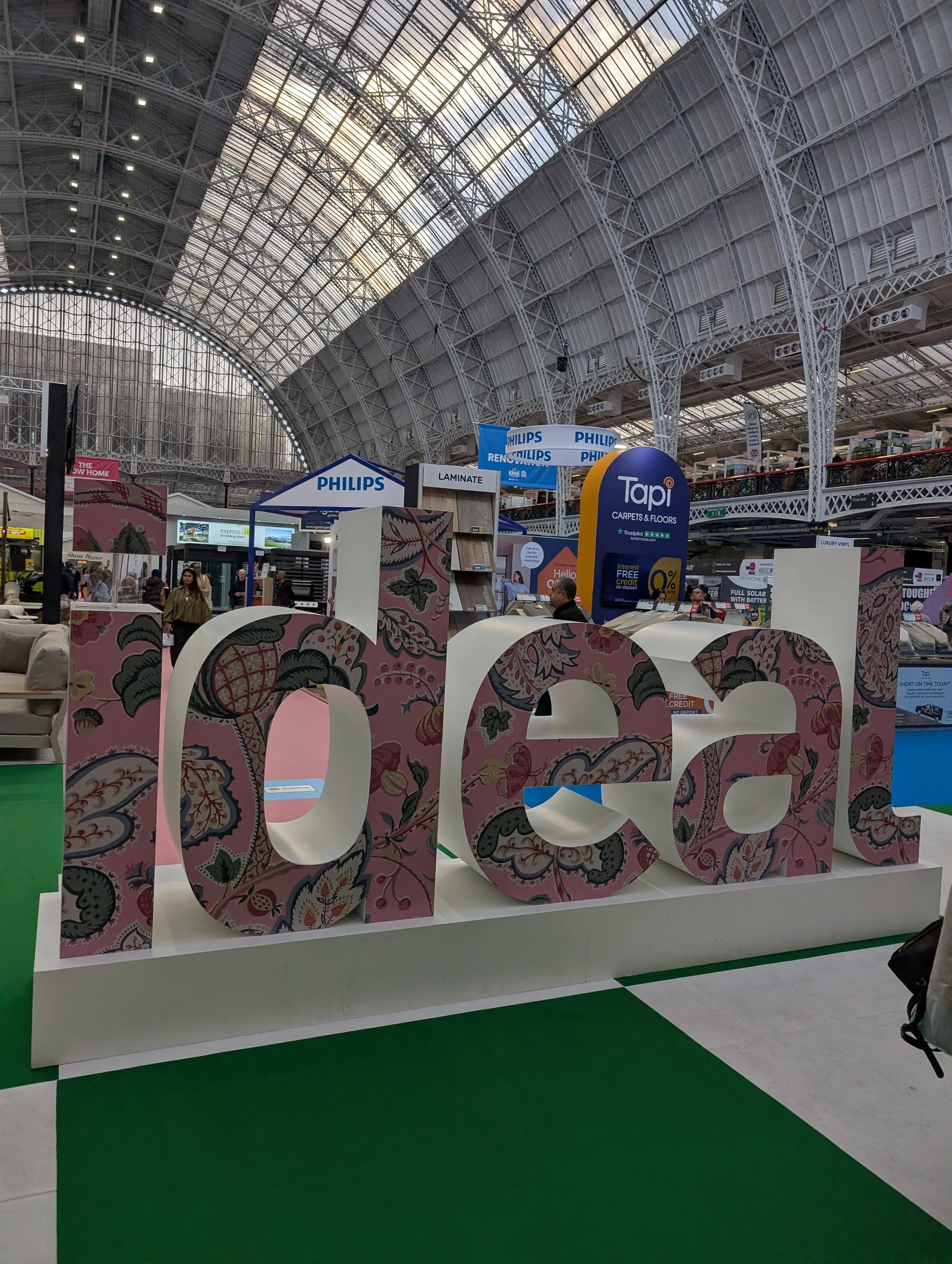
A visit to the Ideal Home Show, with author Eli Davies.
Eli's book The Spinster Cookbook: Culture, Politics and Pleasure in the Single Woman's Kitchen is out now! [aff link]
Find Eli online:
Instagram: @elidaviesss
Substack: elidavies.substack.com
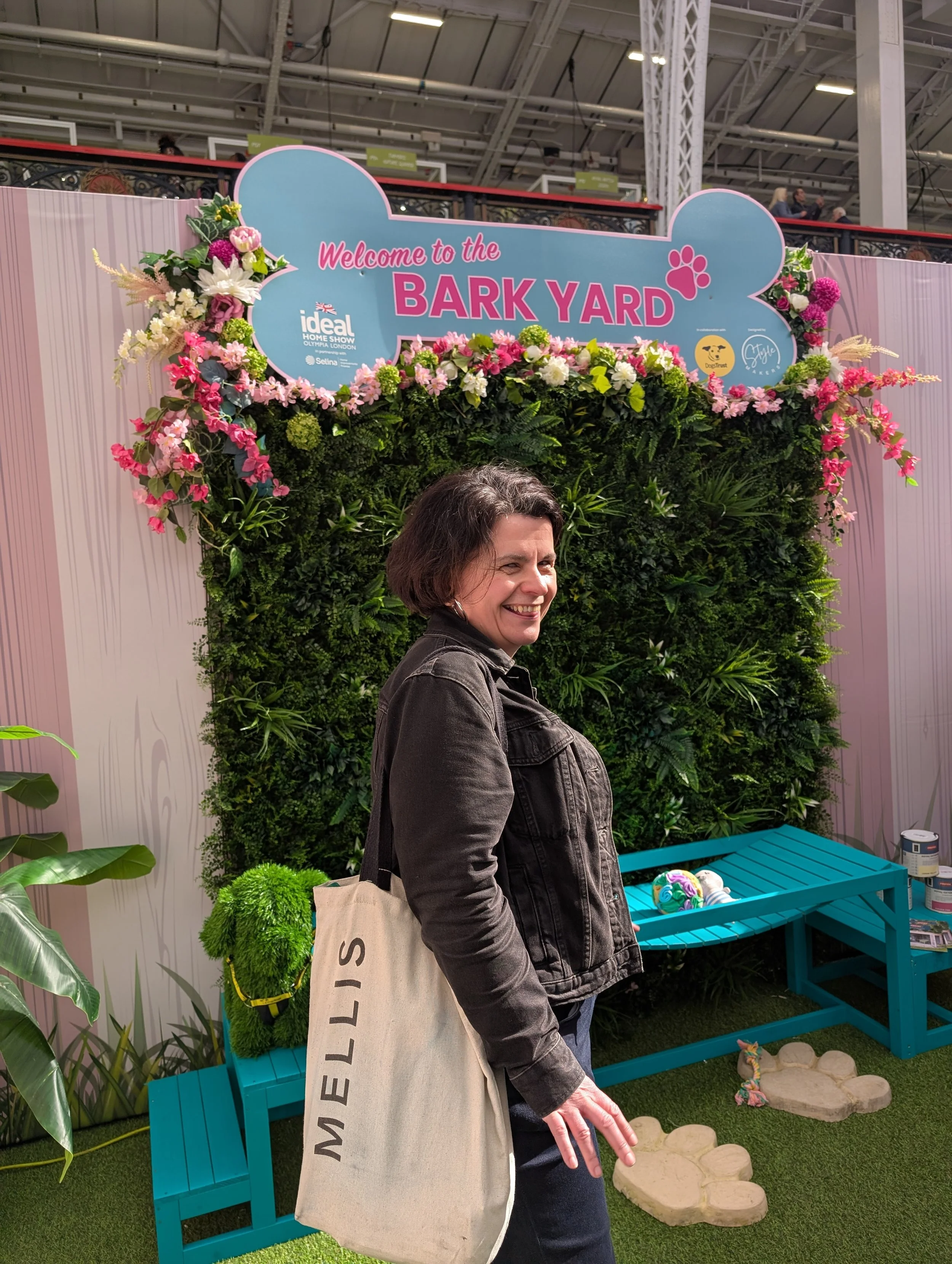
Eli Davies at the 2026 Ideal Home Show
Related episodes:
Trophy Cabinets (Kitchens episode 1) [LINK]
Moving House, Moving Kitchen [LINK]
---
Lecker is a podcast about how food shapes our lives. Recorded mostly in kitchens, each episode explores personal stories to examine our relationships with food – and each other.
Looking for something else to read? Find all of the Lecker Book Club reads on my Bookshop.org list. [aff link]
Support Lecker:
Patreon: patreon.com/leckerpodcast
Substack: leckerpodcast.substack.com
Apple Podcasts: podcasts.apple.com/gb/podcast/lecker/id1158028729
Merch: leckerpodcast.com/merch
Listen everywhere: leckerpodcast.com
Instagram: @leckerpodcast
Music by Blue Dot Sessions
Transcript available below the embed
[00:00:00] Eli: Well, it feels like there is the garden stuff all together, and then there's The Ideal Home as a kind of centerpiece. And then here, where we are now, is lots of Sofas
[00:00:17] Lucy: This is Lecker. I'm Lucy Dearlove.
[00:00:22] Eli: So are we seeing any trends in the sofa kind of design here? Like corner-
[00:00:26] Lucy: I feel like lots of curves.
[00:00:28] Eli: Yeah.
[00:00:28] Lucy: Like, we've got this kind of bubbly situation, which is interesting 'cause I feel like in the kind of, like, less mainstream, that trend's on the way out. Everything's getting a lot sleeker. That was very sort of, like, Instagram girly-
[00:00:42] Eli: Yeah ...
[00:00:42] Lucy: 2025 with your bubble sofa. I don't know.
[00:00:46] Maybe that's just-
[00:00:47] Eli: The corner sofa is still a big thing, isn't it?
[00:00:49] The corner
[00:00:49] sofa's still a big thing.
[00:00:51] Lucy: I'm at the Ideal Home Show in Kensington Olympia with Eli Davis
[00:00:57] Eli: So I'm Eli Davis. I am the author of The Spinster Cookbook: Culture, Politics and Pleasure in the Single Woman's Kitchen, which is about, well, it's fairly self-explanatory from the title, but it's about my relationship with cooking as a single woman.
[00:01:15] But also thinking about my relationship with cooking as someone who was in a couple and how that's changed through different homes I've lived in, through having to build different homes, different relationships I've had. Very interested in the idea of h- food as a way of imagining better ways of living, and my interest, I did my PhD on women's experiences of domestic space during the troubles in the north of Ireland, and I'm
[00:01:42] My research interests are really in the sort of p- cultural and political significance of the home, and I'm always fascinated by that and looking at the role of home in different cultural and political narratives. The home for me is a rich text, full stop. But if you take it outside of just its everyday context and then put it in that setting where you've got all of these other forces, you know, you've got capitalism and consumerism, but you've also got, you know, these sort of human interests, like what hu- what kind of people, the people who are there and what they're doing and how they're, you know, behaving, what they're looking at.
[00:02:25] Lucy: This is actually Eli and I's second trip to the Ideal Home Show together. We went last year as well. Have you ever been? It's a real behemoth of a public exhibition encompassing many things that fall under the umbrella term of the domestic. Some things you might expect, some things you might not. Some things you might expect to be there are not.
[00:02:45] This is my third time. Over the last three years I've seen filtered water taps, an in-home podcast studio, multitudes of motor homes and garden pergolas, jacuzzis as far as the eye can see, quick as lightning charity muggers poised at their stalls ready to catch exhausted shoppers off guard, miles of asphalt samples, the aforementioned sofas, so much garden furniture, paddle courts, some man talking about riding a hoverboard around Piccadilly Circus, solar panels, food subscription services giving the real hard sell, a dozen people getting their teeth whitened en masse, and what feels like hundreds of deck chairs Neon lights, pans, sculptures, paintings.
[00:03:32] It's an overstimulating, all-encompassing event which is attended by thousands of people every year. It was originally founded in 1908 by the Daily Mail, and it was called The Ideal Home Exhibition. At that point, it really kind of captured and propelled forward the explosion of interest in the domestic sphere at the beginning of the 20th century.
[00:03:53] The work of Professor Deborah Sadrian is essential if you're at all interested in this social phenomenon. Her book Ideal Homes, as well as her earlier one, The Ideal Home Through the 20th Century, which includes lots of archive photos of various exhibitions. Fascinating, but looking at them really provokes only one thought for me: where did it go wrong?
[00:04:15] As Sir David English put it in the foreword to the latter book, "The Ideal Home Exhibition has always represented an aspirational world, a world far enough removed to be spectacular, yet close enough to be attainable." Is this still the case? I'll try and let you make up your own mind.
[00:04:37] I
[00:04:43] Eli: feel like the smart home must be over here somewhere. Oh, you can have a go with a Hoover. Sorry. Oh my God, I hate, I hate
[00:04:45] Lucy: Hoover's. Just completely deadpan trying out a Hoover. Yeah, yeah, very seriously. Uh, Hoo-
[00:04:46] Eli: Hoovers are one of those things I think that no- that should be either provided by the government-
[00:04:52] or they, they should be like a, a library. E- every street should have like, you know, depending on the size of the street, should have like five- A communal Hoover ... Hoovers. You know? So I hate buying Hoover. And like I, uh,
[00:05:04] Lucy: uh- It is ridiculous ... this is the sort of thing- I always think about every house having a washing machine as well.
[00:05:05] Yeah Like, can you,
[00:05:07] Eli: can you ... It's
[00:05:09] Lucy: quite a waste ... it's so
[00:05:09] Eli: wasteful
[00:05:13] Lucy: This is like the weird art section
[00:05:14] Eli: Yes
[00:05:15] Lucy: Just like some metal sculptures The
[00:05:16] Eli: metal sculpture
[00:05:17] Lucy: That ... Cliff diver, okay. And you can get 500 pounds off, so it's 2,500 instead of 3,000.
[00:05:26] Eli: Kitchen?
[00:05:27] Lucy: Kitchen.
[00:05:28] Eli: So this is again the kind of, the granite marble work-
[00:05:32] Lucy: Yeah
[00:05:32] Eli: top, kitchen island.
[00:05:34] Lucy: Oh, wow. I mean, that is, that is goals, I'm not gonna lie. I would love a pantry like that.
[00:05:39] Eli: Yeah.
[00:05:40] Are people putting their drinks in to come back for them? 'Cause that's actually amazing.
[00:05:46] Lucy: This kitchen, like most of the exhibits at the, at the show, they're brand concessions really rather than anything else, and they look pretty staged at first glance, but then they usually have something a bit weird or uncanny or plain half-arsed about them.
[00:05:58] This one just had half a dozen open soft drinks in the fridge.
[00:06:02] Eli: What's that?
[00:06:04] Lucy: I've never seen a, a hob
[00:06:06] like
[00:06:08] Lucy: that.
[00:06:08] Oh, is it, maybe that's the, uh, extractor.
[00:06:12] Eli: Oh, and then this is the induction. It's
[00:06:14] like built in. Yeah. It's kinda ugly though.
[00:06:16] Eli: Yeah.
[00:06:17] Lucy: We've drifted over to what's called the smart home section. This is here every year, and ostensibly features technological innovations in the domestic sphere, whether that's a robot Hoover or a smart oven.
[00:06:27] I say ostensibly because one year the main feature in the kitchen was a smart fridge whose main selling point seems to be that the LED lights built into the front panel randomly change color. The salesman for this hob brand that we've just noticed introduces himself to us and explains that this is a recirculation extractor fan built into a smart induction hob.
[00:06:48] Is anything not smart these days? We make polite noises- Oh, wow ... laugh at an appropriate time- Oh, wow ... when he makes a joke about not banging your head.
[00:06:57] It's more of a concern for you, yeah.
[00:06:58] Lucy: I feel like it's rude to go on about how ugly this hob is, but it's unfortunately absolutely hideous.
[00:07:05] Eli: So of course there's, like, the energy providers here who have
[00:07:09] There was Octopus when we, soon after we came in. Yeah Like-
[00:07:12] Lucy: Utility Warehouse there. Yeah, it does make sense, but it also feels weird But I suppose they do have to advertise to us, don't they, because you do have choice. Oh, wow, outdoor kitchens, barbecues. Imagine having an outdoor fridge.
[00:07:35] Eli: So wasteful event.
[00:07:35] All the energy- Yeah ... that these things must use. I'm sorry, they just must be so bad for, like, the-
[00:07:40] Lucy: Yeah. Yeah ...
[00:07:41] Eli: for the environment, for the wildlife, for everything that's going on. Everything.
[00:07:47] Okay. Right So we're back in the main-
[00:07:49] Eli: Shall we- ...
[00:07:49] wing. Shall we, shall we head there?
[00:07:53] Eli: Shall we do it?
[00:07:54] I think it's time.
[00:07:55] Lucy: We're talking about heading into the centerpiece of event, the dream home. We call it the show home, but this is what we mean. It dominates the middle of the exhibition hall, looking mostly kind of like a real house. Though if you compare it to shows of the past, it pales into insignificance in comparison to the full streets that were once constructed in this space.
[00:08:17] I love that the show home's right behind
[00:08:22] Eli: the jacuzzis. The enormous jacuzzis. Oh, look. Oh, I want to get in that. That looks so appealing.
[00:08:29] Lucy: Not to harp on endlessly about the past, the jacuzzis are nice, but are they as nice as the biggest bathroom in the world, which featured at the 1996 event and had a bathtub large enough to hold two full-sized narrow boats?
[00:08:41] I digress. Let's see the dream home.
[00:08:43] Eli: So this is the entrance.
[00:08:44] We're inside.
[00:08:45] Eli: Great first impression. Right. Step into a hallway that sets the
[00:08:51] tone for the entire home. So we've got this
[00:08:52] Lucy: very sort of Victor- somewhat, like, faux Victoriana wallpaper.
[00:08:57] Eli: Sort of Morris-esque-
[00:08:59] Lucy: Yeah ... but
[00:09:00] Eli: also like-
[00:09:00] Lucy: Tween
[00:09:01] Eli: Morris. Yeah, Tween Morris, definitely.
[00:09:02] Lucy: This is the lift, but they haven't actually got it, like, wired in.
[00:09:07] Eli: Oh, it'd be good if they did. I
[00:09:08] Lucy: know, yeah. Imagine. In amongst the rooms, each entirely furnished by a different brand, there's one dedicated to Furnishing Futures, a charity who provide fully furnished homes for survivors of domestic abuse.
[00:09:22] As I say here, this is the first time I've ever seen like anything like this in three years of coming to the show, so it feels progressive to a degree, although quite a jarring experience having it next to the boudoir.
[00:09:33] This is really cool. I don't remember there being anything like this.
[00:09:34] Eli: No, there wasn't.
[00:09:35] There definitely wasn't.
[00:09:37] Lucy: They're,
[00:09:38] like, actually
[00:09:39] Lucy: addressing some, some sense of precarity, in
[00:09:44] Eli: this case, furniture poverty. Yeah, and inequality and poverty- Yeah
[00:09:50] Lucy: poverty.
[00:09:51] Eli: And then next to it is this, which is this- The
[00:09:53] Lucy: gym room ...
[00:09:54] Eli: enormously bougie look.
[00:09:55] Lucy: Built-in coat storage. And next to your bespoke dog garden.
[00:10:01] Eli: The kiddie room.
[00:10:02] Lucy: Very tasteful colors for a child's bedroom.
[00:10:04] Eli: So bathroom. I mean, I have to say this, this bathroom- The walk-in shower ... is really nice. Yeah, it's really nice.
[00:10:09] That looks great. Look at this, like, dressing room.
[00:10:12] Lucy: Dressing room. God, I would love a dressing room But I think that's more that, like, I just end up, because I'm messy, all my clothes end up being all over my bedroom Well,
[00:10:24] Eli: see, what would happen for me realistically if I had this space- It would just be- ... I would just end up throwing things on the floor- But-
[00:10:29] of the dressing room
[00:10:30] Lucy: But then it's not in your bedroom.
[00:10:31] Eli: Yeah, exactly. So I kind of
[00:10:32] Lucy: feel like I'm okay with that.
[00:10:34] Eli: Yeah, no, same. But I would, it wouldn't be like this.
[00:10:36] Lucy: This is h- this is too glam to whatever it is. This
[00:10:39] Eli: is the Hammonds' room. Oh, too glam to give a damn. Yeah, too glam to give a damn.
[00:10:43] Lucy: Oh, so they did all this built-in furniture.
[00:10:46] Built-in furniture has made a real, like, it's having a moment, or maybe it just always has. I don't know. But-
[00:10:52] Eli: See, I, yeah ... I
[00:10:53] Lucy: feel like that's a real thing.
[00:10:54] Eli: That, that w- like, the wall of-
[00:10:55] Lucy: Yeah ...
[00:10:56] Eli: uh, wardrobes and then- And it's, like, seamless,
[00:10:58] Lucy: and there's all these hacks to how you can get IKEA furniture to look
[00:11:05] Yeah. I, I mean, if I had this, it would be full of, like, piled up T-shirts and like-
[00:11:10] Eli: Yeah, yeah
[00:11:16] Lucy: Oh, is that a jacuzzi next to a fish tank?
[00:11:20] Eli: Um, yeah.
[00:11:22] Lucy: Wow.
[00:11:24] Eli: Sauna.
[00:11:25] Lucy: Sauna.
[00:11:26] Eli: Sauna's a big this year. I,
[00:11:28] Lucy: I feel like that's- Yeah, I don't remember seeing it last year at all, and like... And lots, I feel like lots more pools- Mm ... again, for, like, spa at home.
[00:11:36] Eli: Where's the kitchen?
[00:11:37] Lucy: Oh, God, yeah. We haven't even done that yet, have we?
[00:11:40] Eli: No. Now, what we've got here is very sort of muted, like olives and browns, and sort of, you know.
[00:11:50] Lucy: A real dark wood tone Figs in a bowl
[00:11:55] Eli: Figs in a bowl. Autumnal.
[00:11:57] Lucy: Very
[00:11:59] Eli: autumnal. Napkin rings.
[00:12:01] Lucy: Yeah, again, lots of very neutral taupes.
[00:12:04] Eli: Yes.
[00:12:05] Lucy: Olive tree inside. Fake.
[00:12:08] Eli: Oh, here we go.
[00:12:09] Lucy: Oh, wow.
[00:12:10] Eli: You know that thing that we've been talking about before- Oh, my God
[00:12:12] about everything being hidden away?
[00:12:13] Lucy: Yeah. Look at that.
[00:12:14] Eli: To the microwave. Oh,
[00:12:15] Lucy: my God.
[00:12:16] Eli: Hidden in a cupboard.
[00:12:18] Lucy: I mean, I'm not gonna lie, I would love that. And lit as well, like, got it so lighted.
[00:12:23] Eli: That's the fridge. Oh. Which there's loads of stuff in that fridge.
[00:12:26] Lucy: Oh, wow, okay.
[00:12:28] Eli: Is
[00:12:29] Lucy: they doing, like, demos? Love that. So many strawberries.
[00:12:34] Eli: There's not so many, like, random, random-
[00:12:36] Lucy: Yeah ...
[00:12:37] Eli: bowls of prosecco around the place as- Yeah ... there were
[00:12:40] Lucy: last year. Different, you know, different o- occupier.
[00:12:44] Eli: Pulling back on the booze. The,
[00:12:48] Lucy: the booze heavy. I mean, we've still got a- Cocktail shaker. That
[00:12:49] Eli: is nice ... cocktail shaker. Like, um-
[00:12:51] Lucy: I remember that brand from last year, 'cause I'd never heard of it. Berghoff. Sure?
[00:13:03] Oh, oh, the freezer Oh my God. Look at the size of that freezer. Little slayer over there. Could do with one of
[00:13:08] Eli: them.
[00:13:09] Lucy: I mean, how much pantry do you need?
[00:13:11] Eli: This is just two, two, uh, double oven.
[00:13:14] Lucy: Look at the size of this island. That island is genuinely bigger than my kitchen.
[00:13:17] Eli: Do you wanna have a look at the hob?
[00:13:18] Oh,
[00:13:19] Lucy: yeah. Is it the same as the other one? I don't think it is. Oh, it is. No, similar. Yeah Oh, it, it's, I think it's a different brand, but it's got... Is it, it's an extractor in the middle, right? Yes. Yeah. It
[00:13:33] Eli: is.
[00:13:39] Did you notice that that guy made the same joke about the tools? I
[00:13:46] Lucy: know. I
[00:13:47] Eli: was like- It's like lines ... this
[00:13:47] Lucy: is the line they feed you. And they work for different companies. There's sort of no attempt to make it feel relatable or like... It's kind of aspirational, but in this very specific way. It's not like this is how you can work with the space that you've got.
[00:13:58] Eli: Yeah, yeah, yeah.
[00:14:00] Lucy: It's like this is the kitchen you could have if your house has a space the size of a football pitch
[00:14:16] Eli: It's, it's something of a bit, I suppose, if you wanna call it that- ... where I talk about what I really want from a home. What I want to happen is I want a flat provided for me, and I want it to be furnished. I don't wanna have to choose. I don't wanna have to make any decisions. And I want the go- I want the government, I want there to be a department that basically takes responsibility for providing a very, you know, a, a good, a good mattress for everyone.
[00:14:45] I have a sofa. Everyone gets a good mattress. There might be some range of, you know, m- firm, medium, soft, whatever, but they're all excellent. And again, there's a special government department that, that is responsible for mattresses, or you know- Mm ... a subdivision of the, of the, of the furniture department.
[00:15:02] And then you get a sofa. You get a very well kitted out kitchen. Mm. Anything else you want, you can, you can add if you want. But like- There's a catalog ... but that's up to you. But basically, it's the government's responsibility to, like, give you a home that has everything in it. This is partly my... I, I mean, I have had to move so many times over the last few years, and I really struggle with domestic s- I've struggled so many times just having to take apart homes and put them back together again.
[00:15:30] Like, how do you do it? How do you decide what curtains and what sofa and what coffee table and... Yeah, I mean, I'm, I'm kind of camping this up a bit, but- Mm ... I think there is something fair about why should we all have to know about tools? Why should we have ... You know, there, there's no, like-
[00:15:47] Lucy: Right ...
[00:15:48] Eli: w- why should we have to, why should I have to, like, spend hours researching the best mattress?
[00:15:54] I want, I want, you know, a team of experts to be paid by the state to do that.
[00:15:59] Lucy: And to give it to me for
[00:16:01] Eli: free.
[00:16:02] Lucy: Exactly. I think for me, like, I, what I've always felt, felt having been to this event is that there, there feels like a sense of detachment from ... Like, people are c- sort of going there to escape real life, to an extent.
[00:16:16] And, you know, some of that, those things that exist in the home, in the real world, that aren't necessarily reflected there- Mm-hmm ... are things like, you know, mess. Yeah. Um, like caring responsibilities. Like, care is something that you talk about in the book. Talk to me about care and kind of the importance of representing the need for care in the home.
[00:16:43] Eli: Obviously, I talk a lot about, I, I mean, in, in my book, but generally, I talk, you know, quite a lot about liking ... I like to live alone. I like to have my own space. I'm quite content with not living, not cohabiting with a partner. Don't necessarily, I don't really want to do that, have that model of, of domesticity again.
[00:17:06] Mm-hmm.
[00:17:07] Eli: While at the same time, I do want some kind of models of care built into my home life, and thinking about what that might look like. What you've got at the Ideal Home Show is the care that you see represented is very individualized.
[00:17:24] Mm.
[00:17:25] Eli: It's self-care. It's pampering. Last year, when we went, we were picking up on the, the sort of books that, that they'd left around in the, in the bedroom, and it was things to do with, you know, I, I don't know, there was something about dealing with stress and
[00:17:40] There is this sort of understanding somehow that, that there needs to be some acknowledgement of people looking after themselves and self-care, but it's very individualized. It's very much about buying things. It's very much about luxury goods, and it's not about conceiving of living as something that is done as part of a community.
[00:18:04] And so your question about care, what that looks like, for me it's, it's that sort of casual, incidental human contact that you have when you're in, for example, a block of flats where you just might have a very brief conversation with your neighbors when you're coming in and out of your flat. And that sense of people looking out for you- Mm
[00:18:27] but not necessarily being that intimately involved in your life.
[00:18:32] Lucy: Yeah. Yeah.
[00:18:33] Eli: And I think that's such a lovely ... That, like, that for me is my, that's a really ideal way of- Mm ... living for me. Uh, 'cause it's, it's about safety. It's being, it's about being seen It's about having connecti- hu- human connection as much or as little as you want, but it's there
[00:18:51] Lucy: Mm.
[00:18:52] Eli: And it's sort of built into the living environment.
[00:18:55] Lucy: I'm really curious about your feelings about pleasure in the home, and I think this is something that felt, at the Ideal Home Show, there was this real sense of, like, structure and organization around- Mm ... pleasure. And I think last year that manifested in the form of booze.
[00:19:13] Eli: Yes.
[00:19:13] Lucy: Like, bars in the home, whether that was, like, a drinks trolley or, like, a separate room where it was, you know, a bar, and there was, like, decks and neon and whatever in there, or a garden bar and-
[00:19:25] Eli: Mm ...
[00:19:25] Lucy: and this year it felt more like there was, like, the music room-
[00:19:28] Eli: Mm ...
[00:19:28] Lucy: and there was lots of kind of instruments.
[00:19:30] There was, like, these kind of, um, demo cabin games rooms.
[00:19:34] Eli: Mm.
[00:19:35] Lucy: But I feel like pleasure for me in the home doesn't look
[00:19:39] Eli: like that. No. No, it's not organized, is it?
[00:19:43] Lucy: No. No, and I think this comes back to, like, the relationship that your home has with your community-
[00:19:48] Eli: Yeah ...
[00:19:49] Lucy: and your people- Yeah ... I suppose.
[00:19:52] Eli: Yeah. Yeah, I mean, pleasure in the home for me is, is so...
[00:19:56] That's a really good question, 'cause it has so many ... It takes so many different forms. Yeah. And it can be, you know, like, solitary pleasure.
[00:20:03] Lucy: Yeah, yeah.
[00:20:04] Eli: For me, I mean, we were talking earlier about how much we love Friday nights, and mi- for me, like, a Friday night on my own in can be just such a wonderful treat.
[00:20:14] Mm.
[00:20:14] Eli: And I will have, like, a cocktail, and I'll make myself something special for dinner, and I'll watch a film. Like, or just something, you know, just some sense of, like, just, just everything ... Just making things nice and calm and comfortable. And it doesn't nec- you know, and it might mean, like, I'm in bed, you know, by 11, like 10 or 11.
[00:20:36] It's not necessarily about excess. Hey, it's your
[00:20:38] Lucy: night. Yeah.
[00:20:39] Eli: It's just, like, that sense of not having to be anywhere. That's one of the things, I think, when I'm ... What I love about being at home most is, is when I've just got time.
[00:20:49] Lucy: Yeah.
[00:20:50] Eli: It's just, like, stretching out ahead of me. But of course, sometimes pleasure is about having other people in your home, you know.
[00:20:56] It could be some- a bit of a wild night or hosting. Cooking
[00:21:01] Lucy: something nice.
[00:21:01] Eli: Cooking something nice.
[00:21:04] Lucy: But I think, yeah, these, th- this, the environment of the show sort of makes it, uh, makes it appear that you need to have these things in order to, like, create pleasurable experiences- Yeah. Yeah, yeah ... like you need to have a hot tub or
[00:21:16] Eli: And I think that's really anxiety-provoking, these things- Yeah
[00:21:19] or it can be, anyway. I think if you're... I mean, I totally understand why someone would wanna have a hot tub. Like, there's absolutely no- Like, I'm not, the, no.
[00:21:29] Lucy: I'm just like, the logistics of that, like cleaning it.
[00:21:30] Eli: No disrespect to this. Like, I, I, I love it. Like, I love pleasure like that. I love sensory pleasure.
[00:21:38] I love- Yeah ... being in a hot tub. I love being in a sauna, or I love being massaged. Yeah. I love those things so much. Love
[00:21:42] Lucy: sort of luxurious-
[00:21:43] Eli: Oh my God, like, but it's... We're saying this a lot, but if you're all the time having to, if it's all about buying stuff- Mm ... then that's dependent on so many other things, and you might end up getting, you know, getting yourself into some sort of credit plan which then has, you know, to pay for it.
[00:22:02] And then there's- It's like the
[00:22:02] Lucy: opposite of pleasure, yeah.
[00:22:03] Eli: Yeah. It's very... I mean, it, that space itself, isn't it? I mean, we, we've both found it quite overwhelming.
[00:22:10] Lucy: Oh, it's so overwhelming. Yeah.
[00:22:12] Eli: And it's, you know, there's a certain amount of anxiety that you could sort of feel-
[00:22:16] Lucy: Yeah ...
[00:22:16] Eli: if you were not feeling at your strongest.
[00:22:19] Like, oh my God, why are all these people trying to sell me hot tubs? Yeah. Like, tell me that I should have a log cabin in a nonexistent piece of land, on a nonexistent piece of land. Like- Yeah, I
[00:22:29] Lucy: can see myself signing for something- ... if somebody caught me on the wrong day.
[00:22:33] Eli: Like-
[00:22:34] Lucy: Yep, sure. Just leave me alone.
[00:22:35] Eli: Yeah. And it's not a hospitable space, actually. Like- It's not a hospitable space, yeah ... and I, and I, and I think I might have mentioned when we talked about this last year, but my dad was saying he used to go with his mom to the Ideal Home Exhibition, as I assume it must have been then, and he said to me, "Oh, the thing about it was all the free stuff."
[00:22:54] Lucy: Mm.
[00:22:55] Eli: Yeah. And there's no free stuff now. Yeah. There's no sense of anyone being like- Generosity ... "Oh, let me look at..." You know? Like-
[00:23:03] Lucy: Yeah, that was something we- ... you
[00:23:03] Eli: might not buy, buy this sofa- ... we talked about ... but,
[00:23:06] Lucy: you know. Yeah. And it's so interesting as well because the bra- and I mean maybe this is partly why, but, like, the brands must be paying so much to be there.
[00:23:13] Mm. Because, you know, the foot fall is so great. It's such, like, big exposure. But, like, actually, half the time I'm not going into those stands because I actually don't want to buy anything, and so I don't wanna get roped into a conversation that feels awkward. So I might, like, have a little cursory look, little chat, and then move on.
[00:23:30] But actually, like, all if they just offered me, I dunno, a biscuit, a glass or something. Yeah,
[00:23:35] Eli: exactly. But I mean, I think one of the things to, to emphasize here is that- This isn't about throwing shade at the people who are going to the Ideal Home Show and, you know, maybe like checking out what their, what a jacuzzi hot tub in their garden might, might look like, or going out and checking the luxury brand and then thinking, "Okay, you know, I'm gonna find something cheaper."
[00:24:03] You know, the kitchens and the different ways of organizing living spaces These are actually, like, really important questions, and ho- the home is such an important space. It totally makes sense to me that people would, uh, be interested in how these things are being displayed and sold and, you know, want- wanting to see what's out there.
[00:24:24] Lucy: Um- And that, that's the basis for a day out, you know- Yeah ... which is ultimately what these, that's what these events are designed to be. Yeah. Like, they're meant to be, like, an interesting, engaging- Yeah ... experience. Yeah, I, I completely agree, and, like, I don't, I never want to feel like, you know ... It's kind of weird attending, like, feeling like you have a bit of an ulterior motive-
[00:24:41] Eli: Yeah
[00:24:42] Lucy: if people are like, you know, a couple of the guys asked us, like, "What are you doing here today?" And I was like, "Oh, just browsing." Yeah.
[00:24:47] Eli: Yeah.
[00:24:47] Lucy: Um, and like, like, and it does feel a little bit disingenuous to be like, "Oh, I'm here as an impartial observer."
[00:24:52] Eli: Yeah. Yeah,
[00:24:54] Lucy: yeah. Um, but I suppose I feel like, especially given the historical context of it and reading a bit, you know, about how, you know, so many different types of people, whether it was writers or artists or institutions like the
[00:25:08] WI, would be asked to contribute a, like, a house that they would curate. I just think, like, people deserve better. Yeah. They deserve, like, a better, more interesting experience-
[00:25:17] Eli: Absolutely ... that
[00:25:18] Lucy: could still offer, like, what they're hoping- Yeah. ... to get out of the day, which is, like, look at some nice house bits and maybe, like, buy some bits in the smaller stalls, you know?
[00:25:26] Yeah. I think they could still get that experience, and the rest of it is more interesting.
[00:25:30] Eli: T- yeah, absolutely. Yeah, and it's even, you know, because obviously it's, it's an, it's an obvious thing to say, but there is so much out there about home improvement and DIY- Yeah ... and selling your house and all of this.
[00:25:42] Like, it's a huge- Yeah ... industry. Like-
[00:25:44] Lucy: And in many ways, it's fascinating that a, like, a very sort of old-fashioned, like, thing like this exhibition is still so popular. Yeah.
[00:25:50] Eli: Yeah, exactly. Like- And it's in a physical space.
[00:25:53] Lucy: Exactly. Yeah.
[00:25:55] Eli: Yeah. I mean, they re- you know, it really dominates, like, the TV schedules and all of- Yeah
[00:25:59] you know? But-
[00:26:00] Lucy: In every conceivable form.
[00:26:02] Eli: Really. Yeah. Totally. And people are obviously interested. You know, there's an interest in it. Mm. On one hand, I ha- you know, I hate those shows. Oh, God, what are they, what are they called? I can't ... I'm trying to think of some of the examples, but the ones where people are, like, buying, buying a doer-upper, basically- Yeah, like Homes Under
[00:26:21] Lucy: the Hammer
[00:26:21] Eli: or-
[00:26:21] and then, like, Homes Under the H- Yeah ... and then kind of, you know, selling it for- Yeah, flipping it, as they say ... yeah, doing it up and flipping it, basically. Yeah. Yeah. And I hate those shows so much because I think that is at the worst end of, you know, the British interest in homes. It, which is like looking at the home as something, it, not as a home, as an investment, something that you extract value from- An
[00:26:42] Lucy: asset, yeah
[00:26:42] Eli: uh, rather than just a space that every, like, literally everybody needs one. Mm. So, you know, let's just think about it differently. Some of those shows are just a bit more generally about how important home is as a space. Mm-hmm. Like S- Stacy Solomon's Sort Your Life Out is, like, my favorite example of that.
[00:27:01] It, that's such a human i- sort of take on how important h- home is and how important having a comfortable, functioning home- Yeah ... is, that isn't just about it being really fashionable and- Yeah ... or, you know- And
[00:27:15] Lucy: the most, could get you the most value-
[00:27:17] Eli: Yeah ... if you sell it. Exactly. The Ideal Home Show could be a much more sort of interesting space to put those different ideas.
[00:27:27] And it doesn't, you know, obviously I'm coming at it from my, like, communist utopia- ... about, like, the government providing all our sofas.
[00:27:34] Lucy: There's a middle ground though,
[00:27:35] Eli: right? But like, you know, maybe there is a space- There is a
[00:27:38] Lucy: place for private enterprise, but also- Exactly. Like- Let's have the WI
[00:27:42] Eli: curate it- Yeah, yeah
[00:27:42] like, well, we know what this generation- Yeah, yeah, exactly.
[00:27:44] Lucy: Yeah.
[00:27:44] Eli: Yeah. God.
[00:27:45] Lucy: Yeah.
[00:27:47] Eli: Yeah, but maybe there is a space for, yeah, you could have some people trying to flog a jacuzzi on the edge, but also, you know, you have a space where an organization have been given this, a room or a house to kind of represent some of the work that they're doing, some of the thinking that they're doing.
[00:28:01] Or
[00:28:01] Lucy: even, like, Stacey Solomon.
[00:28:03] Eli: Like- Yeah ...
[00:28:03] Lucy: you know, like public figures. 'Cause I think that was something, you know, that's something that I'm really interested in this historic incarnation of, as I've mentioned, is like the sense of the presence of wider culture within, like, an understanding of the home. And I think that's something that I, it really felt like it connected to an ongoing thread through your book, which is that the way that home lives in culture- Mm-hmm
[00:28:27] and how that relates- Mm-hmm ... to our individual sense of home. So you draw on a lot of literary references. You draw on references from films as well as kind of experiences from your own life. Yeah, I guess I'd love to just hear you talk a little bit about, kind of expand on that a little bit and, like, why you see this connection through those forms of culture into our homes.
[00:28:49] Eli: If we're thinking about my book, which is ostensibly about cooking and food, but my interest in cooking and food really is something that I access through my in- it's m- m- mostly about my interest in homemaking- Mm ... in whatever that means and, and what that looks like as a woman in a couple, as a woman on her own, as a woman as part of a community, you know, all of these different things.
[00:29:13] The cultural representat- it just, it just feels like a no-brainer really just to kind of like look at those portrayals of home life. And once you see it, you see it everywhere. I mean, obviously this happened with me and my book is like sp- spinster eating, like, oh my God, single women cooking. Like, I was just seeing it everywhere.
[00:29:31] I was seeing it, iterations of it everywhere. I think certain templates for, you know, like really common templates for drama, like the family The family dinner table I
[00:29:45] Lucy: suppose, like, looking for all... Something that sort of came up a couple of times in the book was, like, this, like, uh, I guess, like, stepping outside of the con- the expected conventions of how a meal might be structured
[00:29:55] Eli: Yeah, yeah, absolutely.
[00:29:56] Yeah, yeah, yeah. And then looking at what that, how that features in various books and films- Mm ... and so on. And there's obvious examples. Bridget Jones is, is the obvious. Sex and the City is another obvious one. It's like anything, you know, that you become obsessed with. Once you're tuned in to that, to those sort of tropes, you start to see them all over the place.
[00:30:19] For me, that's like one of the great things about being obsessed with domestic space and food and relationships and all of those things, how those, all of those things connect with each other. You- it's just everywhere- Yeah ... because it's what we all do. You know, no one is, is not a part of those things. On one level, I suppose that's a bit overwhelming because it's like, oh my God, you know, it's everywhere.
[00:30:41] But actually, it just, it just creates a really, for me, it creates a really, um, rich framework to understand life and to understand the world, and to understand where people are coming from- Mm ... actually, and what's import- you know, how people are feeling and what, what is and isn't important to them. Because everyone comes from a home, some kind of home, be it, you know, obviously some of us are quite lucky and come from very stable convention, you know, w- four walls, all of that.
[00:31:15] Mm. But everyone will have some experience of dwelling, if you wanna call it that. If you see that in everybody, then I think that's a really rich starting point for sort of connecting with people and understanding where they're coming from.
[00:31:29] Lucy: Mm. There's, like, more depictions of home in fictional settings, I think sometimes, because, because of the way it is con- it's c- it's sort of, like, used within fiction to, like, set a scene or, like, tell us something about a character.
[00:31:41] Eli: Yeah.
[00:31:42] Lucy: And then it's maybe sometimes overlooked a bit more in nonfiction
[00:31:46] Eli: Yeah ...
[00:31:46] Lucy: because it's just not consid- unless it's, like, the topic at hand, it's, it's considered, like, a little bit sideline. Like, we don't really care about what the home's like unless it, this, what we're reading or watching or listening to is literally about the home.
[00:31:59] Eli: Yeah. I mean, if you think about something like The Sopranos- Mm ... and I got, obviously, I mean, I do talk about it a lit- just very briefly when I talk about the dinner ta- the symbolism of the dinner table How important is food and dining in The Sopranos? It's so important- Mm ... in so many different ways, and it's so integral to the main character, like how food and cooking and eating is used in that.
[00:32:27] And that p- maybe The Sopranos is quite an obvious example, but it would be interesting to just use that lens across-
[00:32:33] Lucy: Agreed, yeah ...
[00:32:34] Eli: and actually to go back to the, the show, those massive dinner tables that you see on display in a lot of the stands or the din- you know, for some reason why is... Like, the garden furniture feels like the most dominant form of dining.
[00:32:50] Lucy: There is so much garden furniture. Like, as we pointed out this time- Yeah ... like, I didn't know if there was a single appliance concession, but there was maybe, like, 20 garden furniture stands.
[00:33:01] Eli: Yeah. But anyway, so there is this, where be it in the garden or inside in the dining room, but there's this sort of quite conspicuous sort of dining thing, like big solid tables where, I don't know, 8, 12 people are sitting around.
[00:33:15] I actually look at that stuff and it kind of gives me the fear. Like those, those things, like I- it's so f- oh my God, they're so full on.
[00:33:25] Lucy: So full on. Especially 'cause they're often, like, at this, in this setting they're often, like, set in a way that you would never do.
[00:33:33] Eli: I
[00:33:34] Lucy: know, exactly. And like they've got this, like- Yeah, yeah
[00:33:35] sort of, I d- I don't really know what they're called, but like, you know, the kind of like so where you have, like, the plate and then the actual plate- Yeah, yeah ... and then-
[00:33:40] Eli: Yeah, yeah ...
[00:33:41] Lucy: but nobody's about to sit down and have dinner. It just feels really, like, weird and artificial. It's like y- is the table just meant to be like this all the time?
[00:33:48] Eli: Well, I suppose it pa- obviously it's like there because they're trying to flog the-
[00:33:51] Lucy: Yeah, everything on
[00:33:52] Eli: there ... whatever the-
[00:33:53] Lucy: Yeah ...
[00:33:54] Eli: Quookers or whatever. Yeah.
[00:33:54] Lucy: You know, it's all out there. No, I... No, of course. Well, this is it. It's all, it's all a construct, isn't it?
[00:33:58] Eli: Yeah, massively.
[00:33:59] Lucy: Yeah. What were the things that you noticed this year at the show in particular kind of walking around?
[00:34:05] What are the kind of patterns that you felt emerging to you?
[00:34:10] Eli: Well, I think something that we both talked about was the taps. The, uh, boiling water taps. Oh, the taps. The many, many varieties of boiling water taps with all the, the very specific dials on the side. Yeah, different temperatures. Temperature control.
[00:34:24] Lucy: Yeah.
[00:34:25] Eli: Although I didn't see a fizzy water tap 'cause that was, that is the one that I would be- That's the thing that you were talking about, yeah ... I would be quite interested in. So the fixation on taps, water in general. Mm.
[00:34:37] Lucy: Yeah, the jacuzzis. The jacuzzi. I'm,
[00:34:43] Eli: you know, maybe I'm overthinking this- But is there this concern with water something to do with some latent kind of fear, a sense of impending climate catastrophe?
[00:34:59] Lucy: Resource anxiety-
[00:35:00] Eli: Yeah ... or
[00:35:01] Lucy: however we're gonna euphemize
[00:35:02] Eli: it. Yeah. Because there's not really much about that, which is surprising, I think, given that it's b- it's quite mainstream now to talk about sustainability and- Yeah
[00:35:12] even in a sort of pat, you know, tokenistic way.
[00:35:15] Lucy: Yeah, I think there was a couple of solar panels-
[00:35:17] Eli: Yeah ...
[00:35:17] Lucy: maybe like a heat pump, but that was kind of it. No, and no, like, explicit consideration of, like, this is what we, how we can think about alternative forms of energy.
[00:35:26] Eli: Yeah. Really not. The saunas, I've mentioned that a couple of times.
[00:35:31] Lucy: Yeah, the kind of spa, wellness- The
[00:35:33] Eli: spa- ... within the home ... yeah, the spa-ification of one's own home.
[00:35:37] Lucy: I don't know if you noticed, but the bathroom in the showroom, I only noticed it, I think, after we were both leaving the room, but it was a portmanteau and it was called spa-throom.
[00:35:48] Eli: That is-
[00:35:49] Lucy: Which ...
[00:35:49] Eli: uh, don't ever say that word ever again, Lucy I
[00:35:51] Lucy: know.
[00:35:51] It's, it even, like- Especially as somebody with, like, blunt vowels- ... having to say spa-th-room was quite painful. Spa-th-room.
[00:36:01] Eli: Oh, my God. Yeah,
[00:36:03] yeah.
[00:36:03] Eli: Yeah. Yeah.
[00:36:05] Lucy: Utopia, dystopia,
[00:36:08] Eli: who knows? But again, wouldn't it be, you know- Yeah ... the neighborhood spa. Let's have the neighborhood spa, the beautiful public baths. The bath
[00:36:14] Lucy: house.
[00:36:15] Yeah, yeah, yeah. Yeah.
[00:36:16] Eli: The sauna.
[00:36:18] Lucy: Why do we need the individual sauna?
[00:36:20] Eli: Why would you- And again, where's the energy coming from? Yeah. Who's paying for this? Like, what absolute madness is this? Yeah, yeah. I don't know. It's, it's crazy, isn't it? Like, to what extent this is just fantasy, to what extent it is realistic aspiration.
[00:36:35] Lucy: Yeah.
[00:36:36] Eli: What about you? What were the patterns that you ...
[00:36:39] Lucy: Yeah, so definitely, yeah, like you say, definitely the taps. Um, I think just, again, which is something that we talked about last year, was the sort of absence of kitchens. Uh, you know, it's, it's ... Like, I, as somebody that c- consumes a lot of content about kitchens, kitchen design, it feels like a very mainstream pursuit.
[00:36:58] Eli: Yeah.
[00:36:59] Lucy: This is acknowledged in the kind of, like, show home with this very, like, showy, beautiful kitchen with the fancy hob, beautiful, like, huge island. But, like, elsewhere in the show, just not so much. And I don't know if it's a case of, like, they have exclusivity with the one kitchen designer that's- Mm. Mm, mm
[00:37:15] and they don't allow other people to, to show. I don't know if that's the deal. Again, like, very interesting, like, market forces dictating something that is sort of ostensibly broader than that,
[00:37:32] but isn't really in reality. What else did I notice? Uh, I, yeah, I mean, the dog yard. You know, I, I always think they, they seem to have these little sort of, like, lifestyle elements, and I think last year the show home had a pickle court, which, like, pickle being this racket sport that people seem to be getting very into.
[00:37:48] Yeah,
[00:37:48] Eli: yeah.
[00:37:49] Lucy: That was really funny to me. I thought that was really interesting. Like, again, like, the resource, the space. Like, why do you need your own pickle court? Is that not a communal pursuit that you could go and do at a club or, like, a communal court, whatever. But yeah, this year there was kind of like, there were several garden areas to the house, which I guess makes sense 'cause they have, obviously have all these brands that are showing at the garden-
[00:38:12] Eli: Yeah, yeah, yeah
[00:38:13] Lucy: concessions. But yeah, the dog yard where there was a dog shower. You know, like, a dog wardrobe.
[00:38:21] Eli: A dog paddling pool- A dog paddling pool ... or ball pool or whatever it was. Like- Yeah. Yeah. And that is really, like, that kind of, like, addressing the positioning
[00:38:22] Lucy: of pet-
[00:38:31] in the household Mm The very sort of like humanification of pets
[00:38:35] Eli: Yeah, and they're consumers too. Like, they need to have their- The
[00:38:38] Lucy: pets are consumers too ... the pool.
[00:38:40] Eli: Wow Their jacuzzi and- Yeah ... their fancy shower. Yeah.
[00:38:42] Lucy: Yeah. And,
[00:38:44] Eli: and actually, and, and this is something that we, we talked about a bit last year and, and, and this year too, but it's, this quite, um, alienated actually- Mm
[00:38:55] I guess is the word, understanding of, of what non-human life is, including, you know, living beings- Yeah ... live creatures, but also the outside- Yeah ... like plants, trees, grass, you know, whatever. And, and we talked about it last year, and I, I was quoting my friend Kate Bradbury, who's a brilliant wildlife garden- gardening writer.
[00:39:17] And she's observed this trend of people trying to make, bring their interiors, you know, outside into their garden. So you've got the four, you know, you've got the three-piece suite in the garden. Yeah. You've got fairy lights. You've got a fridge. A kitchen. You've got a bar. Yeah, yeah. Essentially like an entire room, you know, outside.
[00:39:38] Yeah. And actually, that shows a real lack of understanding about what, what's actually outside- Yeah ... your home. Yeah. And, and actually how we must learn to live in a way that's cooperating with-
[00:39:54] Lucy: Yeah, rather than imposing ourselves ...
[00:39:56] Eli: rather than imposing it. Rather than imposing it, and so the garden is all about controlling it.
[00:40:01] You know, the, the, the sort of garden displays, the very neat plants. And, and actually, like wildlife gardening is becoming so mainstream. Yeah. You know, the idea of like looking after the bees and all of these things, you know, it's not like a niche thing- Yeah ... that the hippies are just going on about. Like, these are really
[00:40:17] Like, everyone loves Springwatch. Everyone loves these, you know, these sort of nature programs. Yeah. People do care about these things. Yeah. And it's, it's just not reflected at all in that, in that space-
[00:40:28] Lucy: Yeah, yeah ...
[00:40:29] Eli: which is really mad. And I, I think the pet thing is a sort of ... feels like maybe a bit part of that.
[00:40:35] It's like your pet isn't you. It's not an extension of you. Like, just because you want a shower in your garden, a hot shower- Or like
[00:40:44] Lucy: you have just the horror, the horror of like muddy paw prints.
[00:40:47] Eli: Yeah, yeah, yeah, absolutely. It's just about taming everything- Yeah ... and controlling everything, and yeah, the inside-outside thing is really fascinating.
[00:40:56] Lucy: That was kind of continued into like in this, the kitchen this year. There was, it was this sort of like, I mean, honestly, this kitchen island was so enormous. That was the biggest thing. It was ridiculous. I was like, surely nobody has a kitchen island this long. Yeah. It was, you know, like- Yeah, yeah, yeah ... 12 feet long.
[00:41:10] Yeah.
[00:41:11] Lucy: But I mean, I always like the kind of observation of, of the kitchen. Like, like the first year, you know, the first time I went to the Ideal Home Show was three years ago, and the kitchen was very sleek, lots of dark colors, was actually quite cool.
[00:41:24] Eli: Mm-hmm.
[00:41:25] Lucy: Like I remember seeing it and being quite surprised.
[00:41:28] There was sort of like a dark workshop. This was very like artful arrangement of things in a bowl, which just included like a butternut squash, and like things that you wouldn't really expect to find in like a decorative fruit bowl.
[00:41:38] Eli: Uh-huh.
[00:41:39] Lucy: Mm-hmm. And then the, the year that we went, that we first went together last year, the house was very femme.
[00:41:46] The kitchen was sort of very light, like lots of kind of pinks and like- Mm ... bright colors. Mm, mm, mm. Um, but overall, like not a very bold statement at all. And then it, the kitchen was different again this year, and it was this kind of burgundy color. Yeah,
[00:42:00] Eli: yeah.
[00:42:01] Lucy: I guess the most notable feature about the kitchen this year was the island, and I didn't finish explaining the, the connection to the outside being in, which was that the island was two different heights, and in the middle of those two heights was kind of a trough.
[00:42:14] And they had in that trough herbs growing. Right, yeah. Which is actually, I, I think, a really lovely idea, but like in the majority of kitchens, are we getting the conditions required- Yeah,
[00:42:27] Eli: yeah, yeah ...
[00:42:28] Lucy: to keep those herbs alive? Like I, well, it's, I don't have the space to have a trough of herbs in my kitchen.
[00:42:33] But I also think that the light wouldn't be right, the, you know, the kind of water. You're gonna have to be watering that quite regularly. Anyway- Yeah, yeah ... it just felt like an interesting-
[00:42:44] Eli: Yeah, yeah.
[00:42:45] Lucy: Yeah. And the, yeah, the biggest kind of fea- thing about the kitchen this year was the storage, I think, really.
[00:42:50] Yeah. Yeah,
[00:42:51] Eli: yeah,
[00:42:51] Lucy: yeah. With the, the big pantry cupboard which you open. It's got the microwave inside, the light. I think they call it an appliance garage. An app- Where they've got... It's all kind of shut in, and you've got the micro- You can plug things in, and they're hidden away
[00:43:07] You were to curate an ideal home show-
[00:43:13] Eli: Yeah ...
[00:43:13] Lucy: what would you include?
[00:43:16] Eli: I think I'd want to include something that kind of expanded our ideas of what the home is, right? Beyond even the four walls of the home. Like, think about how it connects, how the home connects to the bigger world, to community, to even, like, nature, the environment.
[00:43:36] So I'd wanna have something quite wacky, I think, on some level. For my book, in the final chapter, I did some research, which is kind of thinking about more collective communal ways of eating and cooking. I did some research into sort of feminist utopian architecture, and some of the designs seem, like, completely crazy, like involving underground railways to transport food to the centralized kitchen or, you know, the centralized dishwashing machine.
[00:44:06] Again, the underground railway would transport that from the eating area. And actually, these were things that, like, these women were thinking about. I love that. Mm. Like, and it sounds completely crazy and wacky and maybe impractical, but I think, like, how about we allow ourselves to sort of imagine those- Mm
[00:44:29] things. So I think it would be really great to have something that was just a bit, a bit off, off the wall- Mm ... and imaginative. And I think the ideal home for me isn't big. It's contained. It has a nice sort of sense of containment, but connection to other, other people, either through collective areas or communal space.
[00:45:01] Lucy: Lecker is written and produced by me, Lucy Dearlove. Thanks to my guest, Eli Davis, for being a great Ideal Home Show companion. Her book, The Spinster Cookbook, is out now. It's a beautiful reflection on cooking, eating, and living as a single woman, and I can't recommend it enough. It's a great read. Find Lecker on Instagram at leckerpodcast and on Substack, same handle.
[00:45:24] Music in this episode is by Blue Dot Sessions. This is an independent show which is generously supported by listeners. If you enjoy what you hear and you're in a position to do so, you can sign up as a paid subscriber to support me making Lecker on Substack, Patreon, and Apple Podcasts. Links in the show notes.
[00:45:45] And to any paid subscribers who are listening here, thanks so much for your continued support. Please do rate and review wherever you're listening. It really helps other listeners discover the podcast. And thanks for listening. I'm hoping to be back very soon. I know it's been a bit of a gap since the last episode, so thanks for bearing with me.